 Aguas Calientes City Guide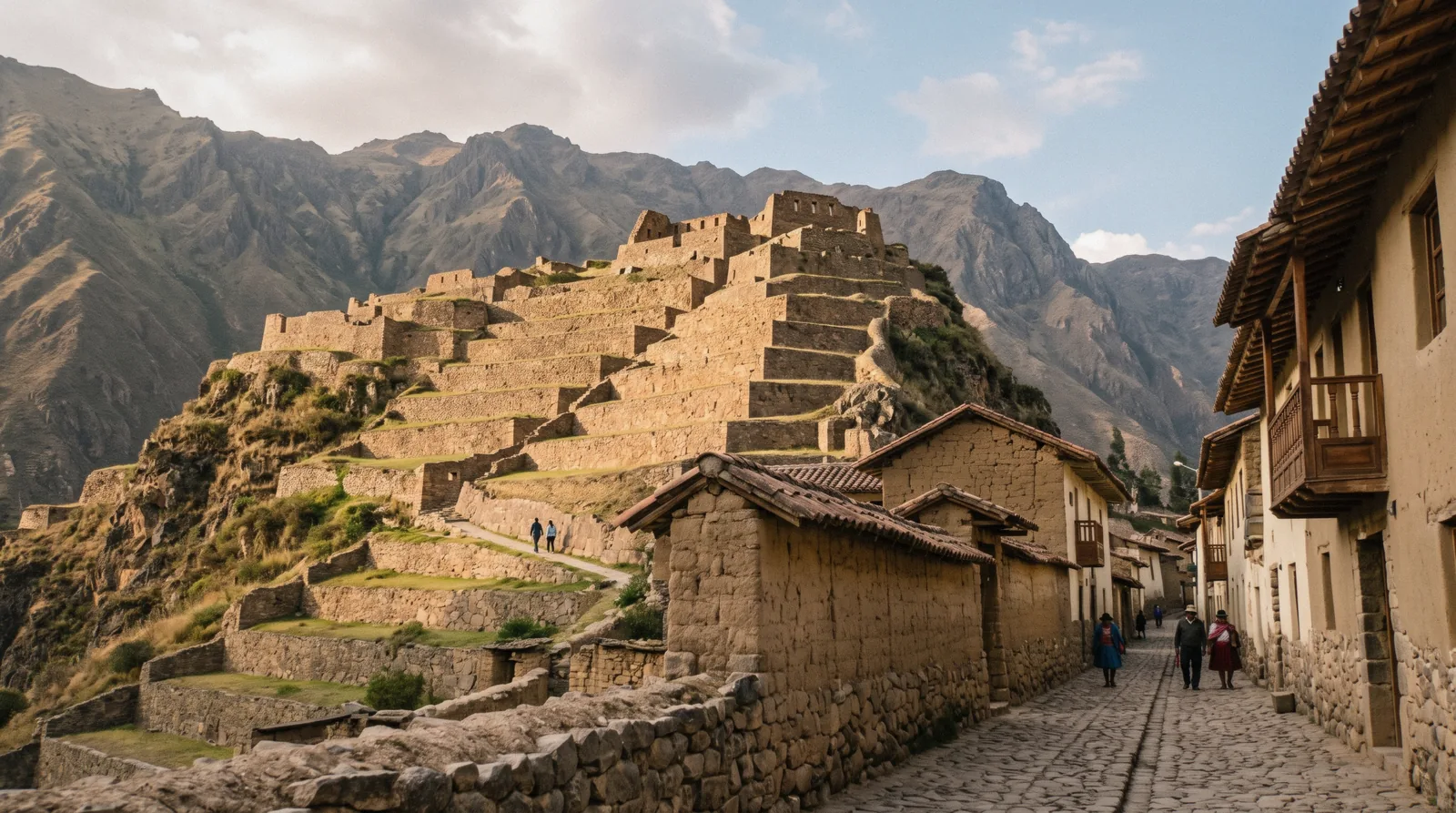
Ollantaytambo, Peru: The Sacred Valley Town Seen From the Train Window
Ollantaytambo is the Sacred Valley town most people from Aguas Calientes only see from a train window, or visit on a day trip from Cusco, before or after Machu Picchu. It deserves more than a glance. The town keeps its original Inca street plan, the ruins on Temple Hill hold some of the finest stonework in Peru, and it is the usual starting point for the classic Inca Trail. This Ollantaytambo Peru page is one stop on our day trips hub and covers the town, the ruins and the rail link back to Aguas Calientes. For the wider region, start with things to do in Aguas Calientes and build outward from there.
Quick answer The short version on Ollantaytambo
Ollantaytambo is a town of about 3,050 people, 72 km northwest of Cusco in Urubamba Province, at 2,792 m (9,160 ft). Its ruins sit on Temple Hill above a town that still follows its Inca street grid, and entry is sold through the Cusco boleto turistico. Guided Sacred Valley day trips from Cusco start at US$16.00, and the commercial train from Ollantaytambo to Machu Picchu Pueblo covers 60 km in about 2 h 10 min.
Key takeaways
- Read our guide to Ollantaytambo to Aguas Calientes for trains, prices and times on the rail leg
- Compare the town stop with the rest of the region on our day trips hub
- Still planning the summit? Our Machu Picchu tickets page explains the entry system
Key facts
Opening hours
| Town and terraces | Open air, no gate hours published–n/a |
|---|
Closed not stated
Planning it
- Time needed
- Most visitors give the ruins and the town grid a half day, longer if they continue by rail
- Book ahead
- Optional — walk-up usually fine
- Address
- Ollantaytambo, Urubamba Province, Cusco Region, Peru
Getting Into Ollantaytambo
Entry to the Ollantaytambo archaeological site is administered by COSITUC through the boleto turistico, not through the machupicchu.gob.pe system. We could not confirm a current official price for that boleto in this pass, so no figure is printed for it here; the two bookable day trips below are what this site sells.
This site sells no Ollantaytambo entrance ticket. What splits buyers between the two Sacred Valley day trips is whether you already have Cusco transport sorted and just want a guide, or want the whole day, including the ride, arranged for you.
| Option | Price | Covers | Booking | Book |
|---|---|---|---|---|
| Sacred Valley: Chinchero, Salt mines, Ollantaytambo & Pisac with Chullos Travel PeruTravellers with their own transport who want a private guide for the full valley circuit | US$16.00 | Guide only, private group, 14 hours through Chinchero, Moray, Maras, Ollantaytambo and Pisac. Entrance fees not included and transport not included | Full refund if cancelled at least 24 hours ahead | Check Availability |
| From Cusco: Chinchero, Moray, Maras and Ollantaytambo with Midway Peru AdventuresTravellers based in Cusco who want hotel pickup and a shorter day | US$45.00 | Cusco hotel pickup, 9 hours covering Chinchero with a textile demonstration, Moray, Maras and an Ollantaytambo fortress view. Whether entry is included is not stated on the card | Full refund if cancelled at least 24 hours ahead | Check Availability |
Neither day-trip card states clearly whether its price includes the boleto turistico: the Chullos Travel Peru trip explicitly does not include entrance fees, and the Midway Peru Adventures trip does not state it either way. Figures current in Q3 2026.
Book a Sacred Valley Day Trip
Both tours below are run by local operators and sold through GetYourGuide. Both carry a 4.4 rating. The cheaper card is guide only, so you arrange your own transport and pay the boleto turistico yourself. The dearer card picks you up at your Cusco hotel and covers more ground in less time, but stops at a viewpoint for the fortress rather than a full visit.
 from $16.00
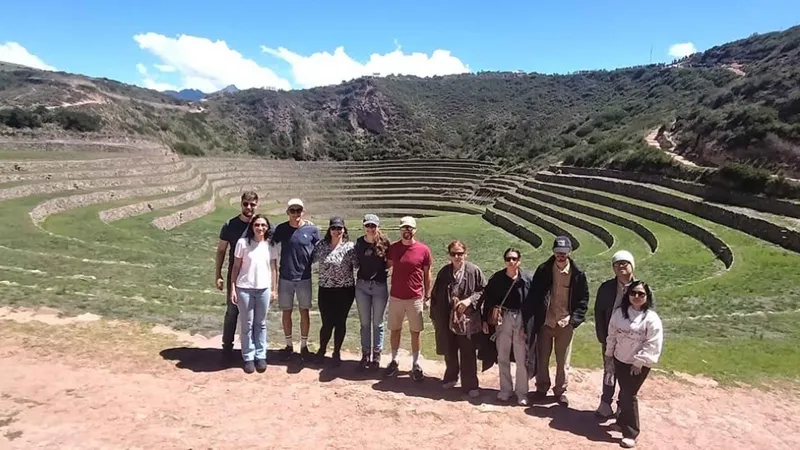
Sacred Valley: Chinchero, Salt mines, Ollantaytambo & Pisac
Chullos Travel Peru's guide-only day trip covers Chinchero, the Moray terraces, the Maras salt pans, Ollantaytambo and Pisac, in a private group with the guide only, no entrance fees or transport bundled in. Cancel up to 24 hours ahead for a full refund.
Check Availability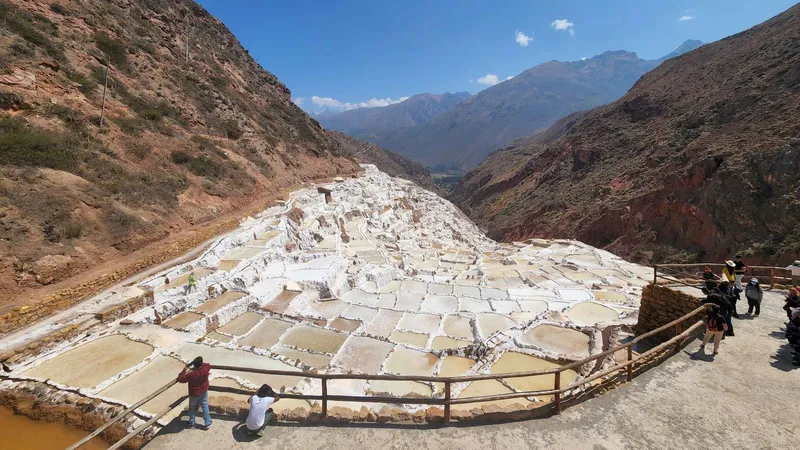 from $45.00
From Cusco: Chinchero, Moray, Maras and Ollantaytambo
Midway Peru Adventures runs a day trip with hotel pickup from Cusco, visiting the Chinchero ruins and an alpaca-textile demonstration, the circular Moray terraces, the Maras salt pools and the Ollantaytambo fortress view. Cancel up to 24 hours ahead for a full refund.
Check AvailabilityPrices, ratings and details are the platform's own. Dollar figures are the listed prices. The platform bills in your account's currency.
Pachacuti's Estate and Manco Inca's Battle
A Royal Estate Rebuilt in the Mid-15th Century
The Inca emperor Pachacuti conquered the site around the mid-15th century and rebuilt it as part of his personal royal estate. That status matters for what you see today. Royal estates got the best labour and the best stone, which is why the Wall of the Six Monoliths on Temple Hill shows masonry of a quality that ordinary settlements never received.
The town below was laid out at the same time on an orthogonal grid, and people still live in it along those same Inca street lines. Few places in Peru let you walk a functioning urban plan drawn by Inca surveyors. Check the official COSITUC site for current access rules before you go, then read things to do in Aguas Calientes for the rest of the trip.
The Battle of Ollantaytambo, 1537
During the Spanish conquest, Manco Inca Yupanqui used Ollantaytambo as a resistance stronghold. In 1537 he won the Battle of Ollantaytambo here, a rare open-field Inca victory over Spanish forces. He did it by using the high terraces above the town and by flooding the plain below, which broke the cavalry charge that usually decided these fights.
The victory did not change the war. Manco Inca abandoned the site soon after and withdrew to Vilcabamba, where the resistance continued. Stand on the terraces and the tactic reads clearly: the slope does most of the defensive work, and the water channels across the valley floor are still part of the landscape.
The Trailhead Town for the Inca Trail
Ollantaytambo is the standard starting point for the classic 4-day, 3-night Inca Trail hike to Machu Picchu. If you have walked into Machu Picchu the hard way, you likely passed through here without stopping. The town functions as a staging point: trekkers gather, porters load, and the trail permits are checked before the group moves out.
Our Inca Trail page owns the permit numbers, distances and costs for the hike itself, so we keep those off this page. What matters here is that the town's hotels, stations and trail agencies all exist because of this role, which makes it a practical base even for people who never put a boot on the trail.
A Lower Stop Between Cusco and the Jungle
Altitude shapes how people travel this corridor. Cusco sits at 3,399 m, Ollantaytambo at 2,792 m and Aguas Calientes at about 2,040 m. Our sum from those published elevations puts Ollantaytambo roughly 607 m lower than Cusco and about 752 m higher than Aguas Calientes.
That middle position makes it a common lower-altitude stop for travellers acclimatising before or after Cusco. Sleeping a night or two here before a Machu Picchu day trip from Cusco lets your body adjust on a gentler gradient. Our Aguas Calientes altitude page covers what the lowest point of the corridor feels like.
Source: Wikipedia (Ollantaytambo), checked 2026-09-25.
The Town and Its Terraces
The Inca Street Grid of Ollantaytambo Town
Ollantaytambo town keeps its original Inca orthogonal street grid, laid out when Pachacuti rebuilt the estate. Streets run at right angles, water channels line the sides, and the blocks correspond to the Inca-era canchas, the walled compounds that grouped families. About 3,050 people lived here at the 2017 census, and the town is small enough to cross on foot in minutes.
Walk it slowly. The grid is the attraction, not just a way to reach the ruins, and it is one of the clearest surviving examples of Inca urban planning still in daily use.
Temple Hill and the Wall of the Six Monoliths
Temple Hill, also called Cerro Bandolista, rises at the edge of town and holds the ceremonial centre of the ruins. Its most famous feature is the Wall of the Six Monoliths, six massive stone blocks fitted together with the precision that made Inca masonry famous. The climb is steep and at 2,792 m you will feel it if you have come straight from sea level.
Steps are stone and uneven in places. Take the ascent at half pace and drink water. The reward at the top is twofold: the monoliths themselves, and the view down over the town grid, the river plain and the terraces that climbed opposite.
The Andenes and the Pinkuylluna Storehouses
Terraced agricultural andenes climb the slope opposite Temple Hill. These were working farm terraces, not decoration: they flattened steep ground, controlled water and created microclimates at different heights. You can see the same engineering logic again at Moray, the circular terraces visited on the Sacred Valley day trip from Cusco with Chinchero, Moray, Maras and Ollantaytambo.
Across the valley, the Pinkuylluna storehouses sit on the hills above town. These stone granaries used the altitude and the prevailing wind to keep grain dry, and they are free to look at from the town streets, which makes them a good second walk if you have energy after the main ruins.
The T'iyupunku Gate and the Defensive Works
The T'iyupunku gate is part of the defensive works around the town. Massive stone doorways like this one controlled who entered the settlement, and the 1537 battle showed why the position mattered: high terraces behind, a floodable plain in front, and a gated approach. Manco Inca used all three.
Walking through the gate today you pass from the open valley into the street grid, which is exactly the sequence its builders intended. Combine the gate, the grid and the hill climb in one loop and you have read the whole site in a couple of hours. The ruins are open air, and no gate hours are published for the town and terraces themselves.
Reaching Ollantaytambo From Aguas Calientes and Cusco
By Train From Aguas Calientes
Most readers of this site start in Aguas Calientes, the town below Machu Picchu. The commercial train from Ollantaytambo to Machu Picchu Pueblo covers 60 km in about 2 h 10 min according to SERNANP's own access table, and the same figure applies in reverse. Trains run along the Urubamba river gorge through country you cannot see properly from the road.
We keep the operators, fares and timetable detail on our dedicated Ollantaytambo to Aguas Calientes page rather than repeating them here, and our Machu Picchu train overview compares the routes. Train seats sell out in high season, so book ahead. If you are arriving overland the wet way, our Santa Teresa hot springs and Hidroelectrica pages cover the alternative approach.
By Road and Rail From Cusco
Ollantaytambo lies 72 km northwest of Cusco. Most visitors reach it on a Sacred Valley day trip like the Chinchero, salt mines, Ollantaytambo and Pisac day trip with Chullos Travel Peru, which gives you a guide but expects you to arrange your own transport and entry. If you drive or take a shared van from Cusco, the road drops from 3,399 m to 2,792 m on the way, our sum from the two published elevations, and many travellers notice the difference.
Ollantaytambo station is also where the majority of trains to Machu Picchu Pueblo begin, which makes it the practical transfer point on any Cusco to Aguas Calientes itinerary. Our Machu Picchu 2-day tour page shows how an overnight stop here fits a two-day plan.
How Long to Give the Stop
Half a day covers the ruins, the town grid and a look up at the Pinkuylluna storehouses. A full day lets you add the storehouse walk and eat without rushing. If you are connecting to a train, arrive at least an hour before departure so a delay on the hill does not cost you the seat.
Independent visitors should remember that the boleto turistico price could not be confirmed on a primary source in this pass, so carry cash for the ticket office and check the official COSITUC page before travel. Travellers continuing straight to the ruins at Machu Picchu need a separate ticket from the machupicchu.gob.pe system, which our Machu Picchu tickets page explains, and guided options for that visit are compared on Aguas Calientes tours.
Ollantaytambo Station Itself
Ollantaytambo station is the main departure point for both rail operators on this route. PeruRail's own FAQ states it offers free luggage storage there from 04:15 to 21:00, separate from Inca Rail's paid custody service at the same station, which matters if you climbed Temple Hill with a full pack and want to leave it before the platform. Inca Rail runs three service tiers from here, named The Voyager, The Prime and The 360 Degree, alongside PeruRail's own departures.
Rail service on this exact route was suspended for a day in August 2026 after a forest fire caused rock and debris to fall onto the track near km 107, a reminder that the single rail line has no road backup. Build a buffer day around any hard onward connection, and read our transport strikes page for the pattern.
Ollantaytambo on the Map
Near Ollantaytambo
Cusco
The regional capital 72 km southeast, at 3,399 m. Most Sacred Valley day trips start here and most travellers pass through it on the way to the valley.
Day Trips From Aguas Calientes
Our hub page for the whole region, covering every excursion you can build around a stay in Aguas Calientes and how the pieces connect.
Ollantaytambo Questions
How far is Ollantaytambo from Aguas Calientes?
SERNANP's access table puts the commercial train journey between Ollantaytambo and Machu Picchu Pueblo, the station for Aguas Calientes, at 60 km taking about 2 h 10 min. Our Ollantaytambo to Aguas Calientes page carries the operators, fares and timetables for that leg.
What is the entrance fee for the Ollantaytambo ruins?
Entry is sold through the Cusco region's multi-site boleto turistico, administered by COSITUC. A current official price could not be confirmed on a primary source in this pass: COSITUC's own site returned no readable ticket-price content over a plain fetch. We do not print a figure we cannot verify, so check the official COSITUC page before travel.
Do the Sacred Valley day tours include entry to Ollantaytambo?
It depends on the card, and neither is clear. The US$16.00 Chullos Travel Peru trip explicitly does not include entrance fees, it is a guide-only service. The US$45.00 Midway Peru Adventures trip does not state either way whether entry is included, and it stops at a fortress viewpoint rather than a full visit. Ask the operator before booking.
What is there to see in Ollantaytambo town itself?
The town still follows its original Inca orthogonal street grid, which you walk through for free. Above it, Temple Hill holds the ceremonial centre and the Wall of the Six Monoliths, agricultural terraces climb the opposite slope, the Pinkuylluna storehouses sit on the hills, and the T'iyupunku gate is part of the old defensive works.
Is Ollantaytambo a good place to acclimatise before Cusco?
It sits at 2,792 m, which by our sum of the published elevations is about 607 m lower than Cusco at 3,399 m and about 752 m higher than Aguas Calientes at about 2,040 m. That middle altitude makes it a common lower stop for travellers adjusting before or after Cusco, though individual tolerance varies.
Can I start the Inca Trail from Ollantaytambo?
Yes. Ollantaytambo is the standard starting point for the classic 4-day, 3-night Inca Trail hike to Machu Picchu. Permit numbers, distances and costs for the trail are covered on our Inca Trail page, since those figures belong to the hike rather than the town.
Ollantaytambo on Video
【4K 60fps】WALK - OLLANTAYTAMBO ~ walking Tour - Peru
A walk through the Inca street grid and up toward the ruins.
Video: World Walking ToursVisit Sacred Valley BEFORE Machu Picchu! | 2025 Peru Travel Guide
Where Ollantaytambo fits into a wider Sacred Valley day trip from Cusco.
Video: Finding Gina Marie – Travel the WorldOllantaytambo: The Land of History and Tradition
The town and ruins framed through their Inca history.
Video: Salkantay TrekkingPrices, hours and terms are set by the venue or operator and confirmed at checkout.
We may earn a commission if you book through one of our links, at no extra cost to you. Full affiliate disclosure