 Aguas Calientes City Guide
Hidroelectrica or Train to Machu Picchu: An Honest Cost Comparison
Searching "hidroelectrica or train to machu picchu" usually means one of two things. You are standing at Hidroelectrica station wondering whether to walk the rail-side path or buy a 30-minute train ticket into Machu Picchu Pueblo. Or you are still in Cusco, weighing the whole Hidroelectrica overland route against a direct train from Cusco or Ollantaytambo. This post answers both questions honestly. The walk really is free. But getting to Hidroelectrica is not, and no official price list exists for that overland chain. By the end you should know which scenario matches your own trip, budget and tolerance for unplanned costs. For the wider picture, see things to do in Aguas Calientes and Aguas Calientes tours.
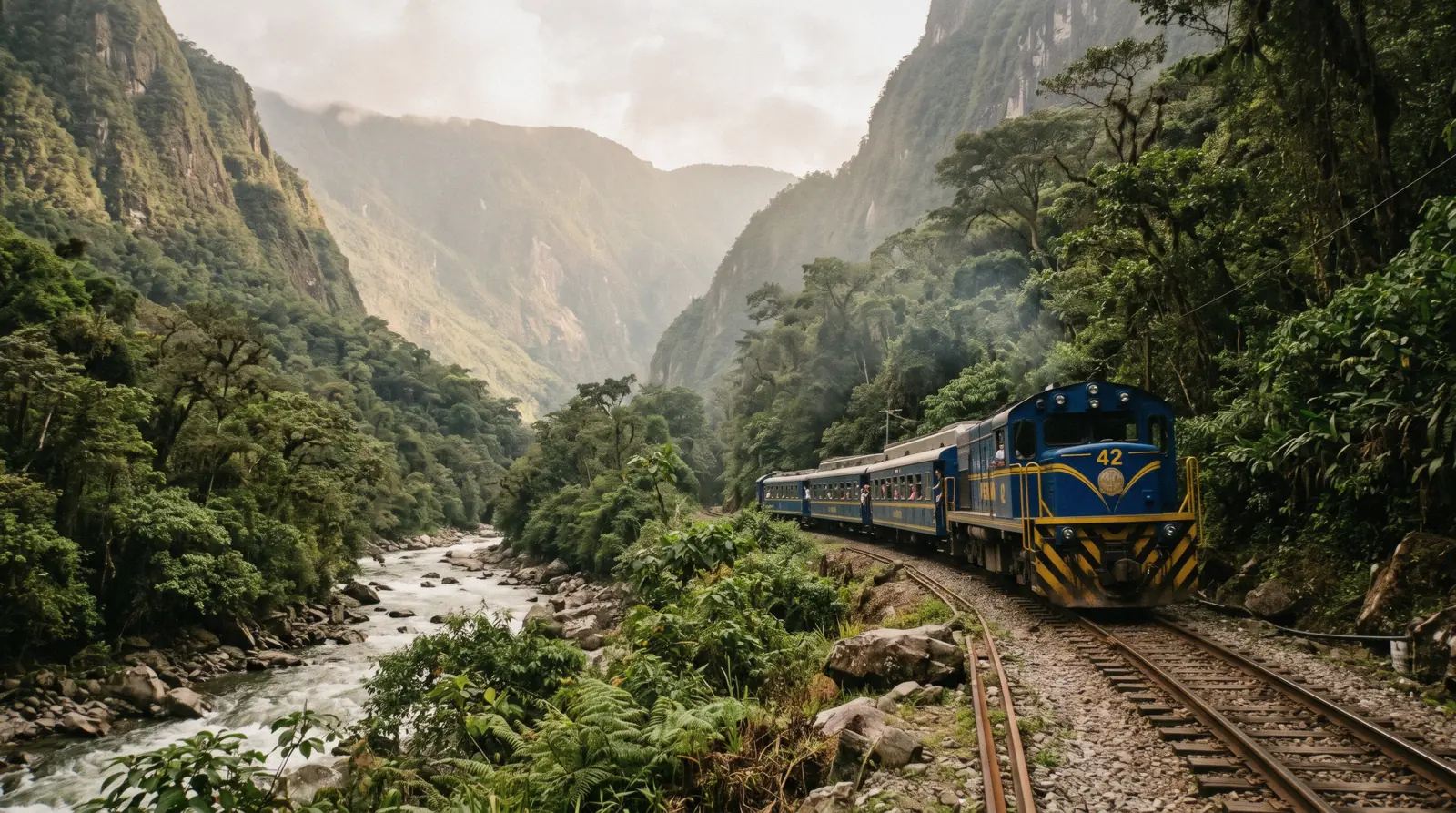
Quick answer Quick answer: walk vs train from Hidroelectrica
The walk from Hidroelectrica to Machu Picchu Pueblo takes about 2 hours 30 minutes and is free once you are there. The local train covers the same stretch in about 30 minutes but has no published fixed fare. Neither option includes getting to Hidroelectrica itself, which has no official price list.
Key takeaways
- See things to do in Aguas Calientes for what to do once you arrive, however you get there.
- Compare every bookable option on Aguas Calientes tours, including the jungle trek that bundles the whole overland chain.
- The Machu Picchu Entrance Ticket is a separate cost that applies no matter which route you pick.
The Two Questions People Actually Mean
This keyword hides two different decisions, and this post answers both of them in turn.
Question one: walk or ride once you are at Hidroelectrica
Hidroelectrica is a hydroelectric plant at the end of a road from Santa Teresa, in the Vilcanota valley below Machu Picchu. From its small station, one final stretch separates you from Machu Picchu Pueblo, the town most people still call Aguas Calientes. You can walk it along the rail line, or you can buy a ticket for the local PeruRail service that covers the same route in about 30 minutes.
This is the comparison most travel blogs obsess over, because the walk costs nothing.
Question two: the whole Hidroelectrica route versus a direct train
The deeper comparison is between two entirely different strategies. The Hidroelectrica route means an overland journey from Cusco through Santa Maria and Santa Teresa, then the walk or local train into town. The direct-train strategy skips Hidroelectrica completely and puts you on a single scheduled service from Cusco or Ollantaytambo to Machu Picchu Station.
This post covers both, because the honest answer to "hidroelectrica or train to machu picchu" depends on which leg you are actually deciding about.
One cost that applies whichever route you pick
The Machu Picchu citadel entrance ticket is separate from all transport and applies no matter how you arrive. Do not let any comparison, including the one below, hide that. We include it in the tour list near the end so you can budget for it alongside your transport.
Walking From Hidroelectrica: the Free Option
The zero-dollar leg that everyone talks about, and the hidden leg that made it possible.
What the walk is actually like
PeruRail's own destination page states the walk from Hidroelectrica takes about 2 hours 30 minutes. Independent trekking-operator and blog sources, which are not official, describe it as roughly 10 km, flat, running alongside the rail line and the Urubamba river, with a couple of short tunnels. No official body publishes the distance as a fixed figure, so treat the 10 km number as third-party-reported.
The terrain itself is easy. There is no significant climb, and the path follows the railway the whole way into town.
The part the free narrative skips
Here is the tradeoff most posts glide past. The walk is free once you are standing at Hidroelectrica. Getting to Hidroelectrica is not.
The overland chain runs from Cusco to Santa Maria, then Santa Maria to Santa Teresa, then Santa Teresa down to the hydroelectric plant. No transport authority publishes fares or schedules for these informal colectivo and bus legs. They are private, unregulated services, and third-party guides disagree on what each leg costs.
So when someone tells you they reached Machu Picchu for free, they mean the last 10 km. The full journey has a real price, it is just unpriced on paper. Budgeting for it means asking around in Cusco and accepting that your total is uncertain until you have done it.
When the walk suits you
The walk works best for travellers with flexible time, light packs and no fixed arrival time in Machu Picchu Pueblo. SERNANP recommends visiting the sanctuary between April and October. In the rainy season from November to March, the rail-side walk and the Santa Teresa road are both less pleasant, and road travel to Hidroelectrica can be slow.
A fixed citadel entry slot gives the walk a hard deadline, since tickets are valid only for the date and time purchased.
The 30-Minute Local Train From Hidroelectrica
What you buy when you skip the walk.
What PeruRail officially says
PeruRail's Hidroelectrica destination page states the ride to Machu Picchu Pueblo takes approximately 30 minutes, offered on PeruRail Expedition, PeruRail Vistadome and PeruRail Vistadome Observatory services. The page does not publish a fixed fare and directs buyers to its live booking platform, so any specific figure you see quoted elsewhere is not an official published price. PeruRail recommends booking at least 30 days ahead, which matters if you are planning this leg late in a trip.
Weighing the train against the walk
The train buys you two hours. It also buys you certainty of arrival time, which matters when your citadel ticket has a fixed entry slot and no date changes are allowed. The catch is that the unpriced problem does not go away.
You still had to reach Hidroelectrica overland first, and that chain still has no official fare list. The local train converts a 2.5 hour walk into a 30 minute ride, nothing more. For tired legs after a long road day, or in heavy rain, that trade can be worth it.
For a fresh walker with time to spare, the platform ticket may not be.
The Direct Train From Cusco or Ollantaytambo
The strategy that skips Hidroelectrica entirely.
Journey times on the direct route
PeruRail's own FAQ states the journey from San Pedro Station in central Cusco to Machu Picchu Station takes about 4 hours 30 minutes, and from Poroy Station about 3 hours 30 minutes. SERNANP's published access table gives Ollantaytambo to Machu Picchu Pueblo as 60 km and about 2 hours 10 minutes. Trains arrive at Machu Picchu Station in the town, not at the citadel itself, so a bus or walk up to the entrance follows.
These trains have no fixed low fare either, prices move by date and demand, but a listed product such as Train to Machu Picchu at $130.00 shows what a one-way booking typically starts at.
What you are actually paying for
The honest framing is not free versus expensive. It is one fixed ticket with a published schedule versus a multi-leg overland chain with no official prices at all. On the direct train you know the departure time, the arrival time and the fare before you leave home.
On the Hidroelectrica route you know the walk is free and the last train leg exists, but the overland legs stay uncertain until you are on them. That predictability is a real part of the price, and it is worth something different to every traveller. Both PeruRail and Inca Rail cap carry-on luggage at 8 kg per ticket regardless of route, so pack to the same limit whichever strategy you choose.
Which Is Actually Cheapest
The table below compares the three main arrival strategies side by side. The walk from Hidroelectrica is free on its final leg, but the overland journey to reach Hidroelectrica has no officially published fares, so its true cost is unknown until you have paid it. Train times come from PeruRail and SERNANP, and the direct-train figure comes from a listed bookable product.
| Route | Fixed price? | Time | Real cost driver |
|---|---|---|---|
| Hidroelectrica walk | Final leg free, overland legs to Hidroelectrica unpriced | About 2h 30m for the walk itself, plus the overland journey | The unpriced Cusco to Santa Teresa colectivo chain |
| Hidroelectrica local train | No fixed published fare, booked live | About 30 minutes, plus the overland journey | Live fare plus the same unpriced overland chain |
| Direct through-train | No fixed low fare, but a single booked ticket, e.g. $130.00 for Train to Machu Picchu | About 2h 10m from Ollantaytambo, 3h 30m from Poroy, 4h 30m from San Pedro | Date and demand pricing on one predictable ticket |
| Machu Picchu entrance ticket | Applies to every route, e.g. $43.00 for the Machu Picchu Entrance Ticket | Not a transport cost | A separate cost no route lets you avoid |
Figures current 2026-09-25.
Three Traveller Scenarios
Match your own trip to one of these before you decide.
The backpacker with time to spare
You are in Cusco for a while, your citadel ticket is days away and your pack is light. The Hidroelectrica walk fits. But price the whole overland chain honestly before you commit.
The legs through Santa Maria and Santa Teresa are cheap in backpacker terms yet unpriced on paper, and they consume one to two days of your trip. If your total still beats the direct train for your dates, walk. If the colectivo quotes and an extra night of hostels add up to more than a $130.00 train seat, the free walk was not actually free.
The trekker finishing a 4-day jungle route
If you arrive at Hidroelectrica as the finale of an organised trek, the walk-versus-train question is mostly already solved. A package such as the 4-Day Inca Jungle Trek to Machu Picchu: Biking, Rafting & Zipline at $429.00 bundles the overland transport, guide, meals, activities and accommodation into one price, which removes the unpriced-leg problem entirely. You pay the operator once instead of negotiating each colectivo yourself.
From Hidroelectrica, most trekkers walk the final 2.5 hours into town because the legs are fresh and the time is already scheduled.
The traveller who wants one predictable price
If your citadel ticket is fixed, your leave date is fixed and surprises stress you, buy the direct train. One ticket, one schedule, one luggage limit, one operator to call if something goes wrong. Yes, it costs more than the walk on paper.
It also carries none of the uncertainty of an informal multi-leg bus chain with no timetable and no published fares. For this traveller the premium is not a waste, it is the product. Whichever scenario is yours, remember the citadel entry is always extra.
Book the Route That Fits
These are the three bookable pieces most travellers combine. The train covers the direct route, the jungle trek bundles the whole Hidroelectrica overland journey, and the entrance ticket applies no matter how you arrive.
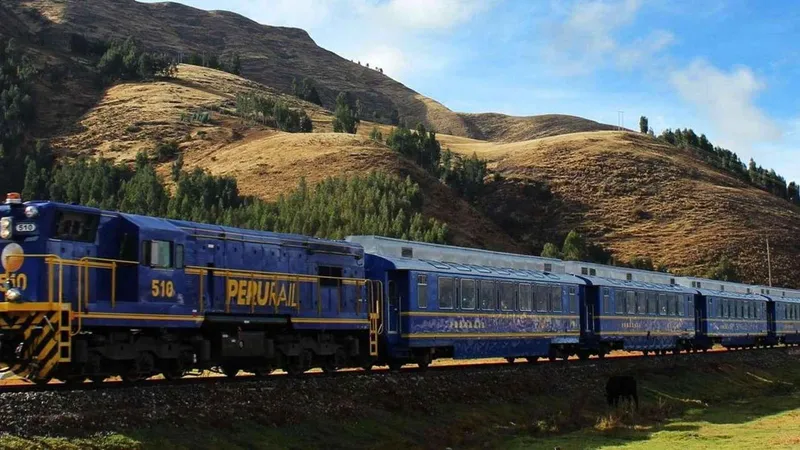 from $130.00
Train to Machu Picchu
Trip Tour books the scenic train ride from Cusco toward Aguas Calientes, the gateway to Machu Picchu, with pickup included. Cancel up to 24 hours ahead for a full refund, and note that availability is limited on this route.
Check Availability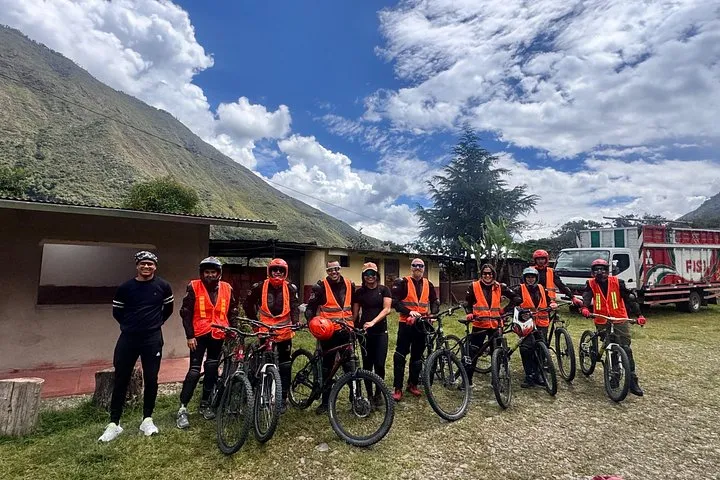 from $429.00
4-Day Inca Jungle Trek to Machu Picchu: Biking, Rafting & Zipline
Encuentros Peru Adventure bikes down from Abra Malaga, hikes through cloud forest and jungle, and includes 3 nights of accommodation, full-suspension mountain bikes with pads and helmet, and all meals. Rafting and ziplining are optional add-ons at roughly $40 more, not part of the base price.
rafting and zipline are optional extras, roughly $40 more, not included in the base $429 price
Check Availability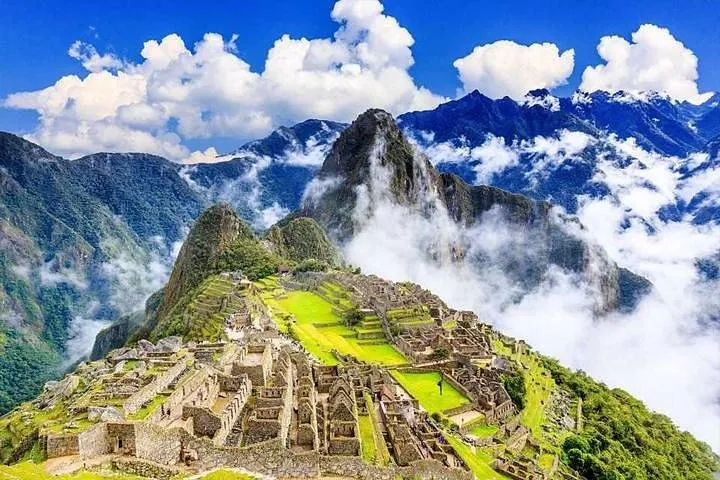 from $43.00
Machu Picchu Entrance Ticket
MachuPicchu.Center sells the official entrance ticket alone for the circuit you choose, with the private guide and bus only bundled in on the separate 2-day Circuit 2 commitment option. All sales are final, so double-check your date and circuit before paying.
Check AvailabilityPrices, ratings and details are the platform's own. Dollar figures are the listed prices. The platform bills in your account's currency.
Hidroelectrica or Train: Common Questions
How long is the walk from Hidroelectrica to Machu Picchu Pueblo?
PeruRail states it takes about 2 hours 30 minutes. Third-party trekking sources describe it as roughly 10 km, flat, along the rail line and the Urubamba river, with a couple of short tunnels. The distance figure is not official.
How much does the local train from Hidroelectrica cost?
PeruRail does not publish a fixed fare. Its page states the ride takes about 30 minutes on Expedition, Vistadome or Vistadome Observatory services and directs buyers to its live booking platform. PeruRail recommends booking at least 30 days ahead.
Is the Hidroelectrica walk really free?
The final leg is free once you are at Hidroelectrica. The overland journey from Cusco via Santa Maria and Santa Teresa to reach Hidroelectrica has no official fares or schedules, so it carries real costs that are not published anywhere. The walk is free, the route is not.
What is the fastest direct train to Machu Picchu?
PeruRail states about 2 hours 10 minutes from Ollantaytambo per SERNANP's access table, about 3 hours 30 minutes from Poroy Station and about 4 hours 30 minutes from San Pedro Station in Cusco. Trains arrive at Machu Picchu Station in the town, not at the citadel gate.
Do luggage limits apply on these trains?
Yes. Both PeruRail and Inca Rail cap carry-on luggage at 8 kg per ticket regardless of route. If you arrive at Hidroelectrica by colectivo with a large pack, the same practical limit applies to the trains, and the rail-side walk has no weight limit at all.
When is the best time of year for the Hidroelectrica route?
SERNANP recommends visiting April to October. The rainy season runs November to March, when both the rail-side walk and the Santa Teresa road are less pleasant. Rain affects road conditions to Hidroelectrica more than it affects the train.
Is the Machu Picchu entrance ticket included in any transport option?
No. The citadel entrance ticket is a separate cost on every route, whether you walk from Hidroelectrica, ride the local train or arrive on a direct service. The organised jungle trek bundles transport and other services into its price, but you should still confirm your entry ticket situation before booking.
Hidroelectrica or Train: Video
Hiking to Machu Picchu from Hidroelectrica: The Truth About the Cheapest Route
Weighs the same walk-versus-train tradeoff this post covers.
Video: ErvvinvlogsCheapest Way to Machu Picchu
A budget-route comparison matching this post's angle.
Video: Alex ChaconSuper Budget Guide to Machu Picchu (Cusco - Hidroelectrica - Hike)
Covers the full budget chain discussed in the scenarios above.
Video: QZ Tours