 Aguas Calientes City Guide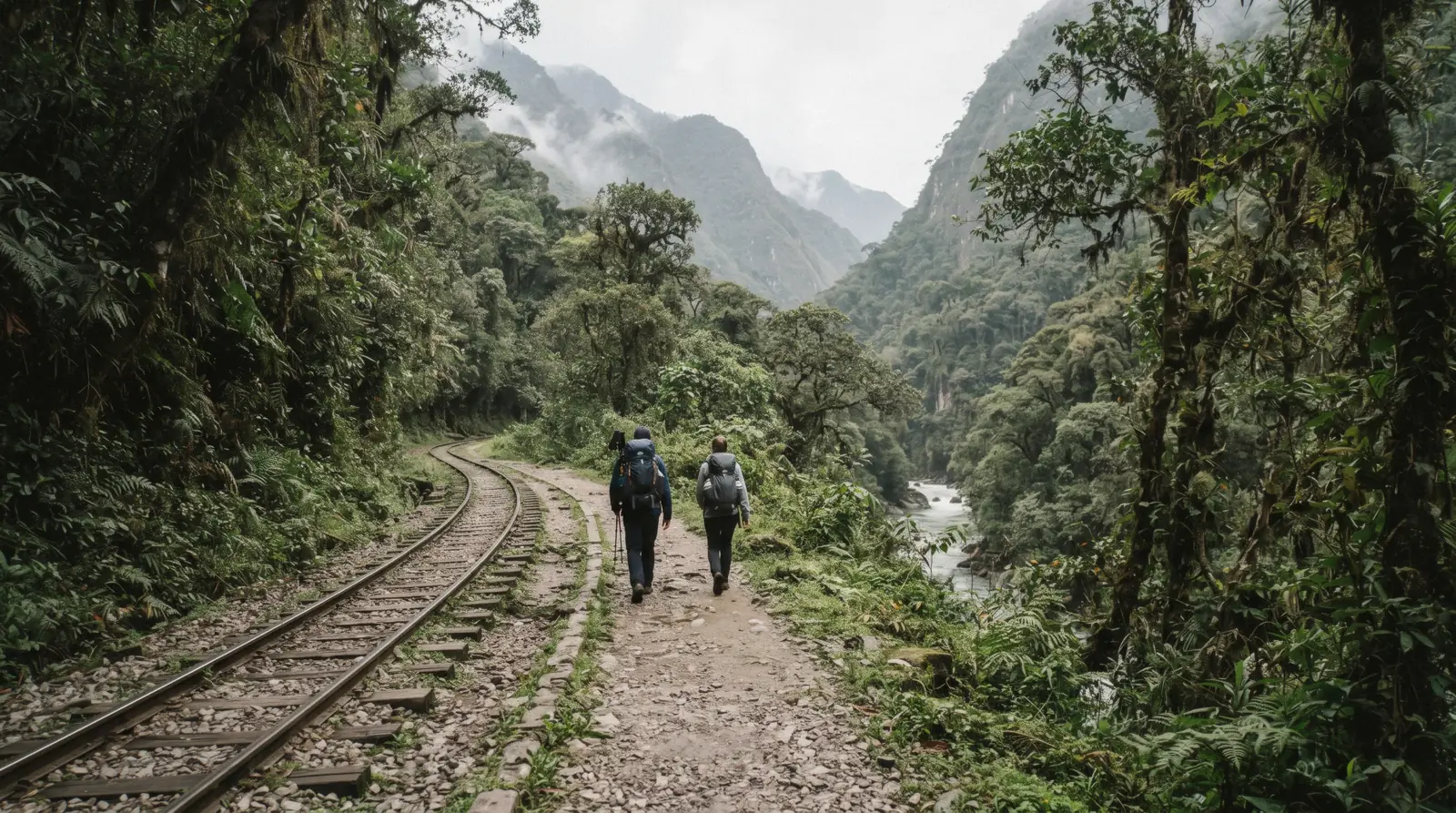
Hidroelectrica: What It Is and How to Reach Aguas Calientes From There
Hidroelectrica is not a sight, it is a hydroelectric power station and rail stop where the road from Santa Teresa ends. For budget travellers and anyone finishing a jungle trek, this is the doorway into Aguas Calientes: a 30-minute local train or a flat rail-side walk. This page covers what the place is, both ways through it, and the SERNANP access point nearby. For the wider overland picture from Cusco, see Cusco to Aguas Calientes, and to book a trek that finishes here, browse Aguas Calientes tours.
Quick answer What Hidroelectrica is and how to get to Aguas Calientes from it
Hidroelectrica is the Central Hidroelectrica Machupicchu, a hydroelectric power station and rail stop at about 1,890 m on the Urubamba river. From there it is a 30-minute PeruRail train or a roughly 10 km walk to Aguas Calientes.
Key takeaways
- The train from Hidroelectrica station to Machu Picchu Pueblo (Aguas Calientes) takes about 30 minutes on PeruRail Expedition, Vistadome or Vistadome Observatory services, and PeruRail recommends booking at least 30 days ahead.
- The walking alternative takes about 2 hours 30 minutes according to PeruRail, and third-party sources describe it as roughly 10 km of flat rail-side path. See things to do in Aguas Calientes once you arrive.
- Most travellers reach Hidroelectrica on a 4-day Inca Jungle Trek or by comparing options on the Aguas Calientes tours page.
Key facts
Opening hours
| PeruRail local train | Runs on its own schedule; exact departure times not published |
|---|---|
| SERNANP km 122 access point (Apr-Oct) | 07:30–16:30 |
Admission
- Adult
- No fixed local-train fare published, booked live
- Free
- The rail-side walk itself is free
Planning it
- Time needed
- About 30 minutes by train or 2 to 2.5 hours on foot for the final stretch alone
- Book ahead
- Recommended — a few days
- Address
- Hidroelectrica, Machupicchu District, Urubamba Province, Cusco Region, Peru
What Hidroelectrica Is
Before the routing decisions, it helps to know what this place actually is, since the name misleads a lot of first-time visitors.
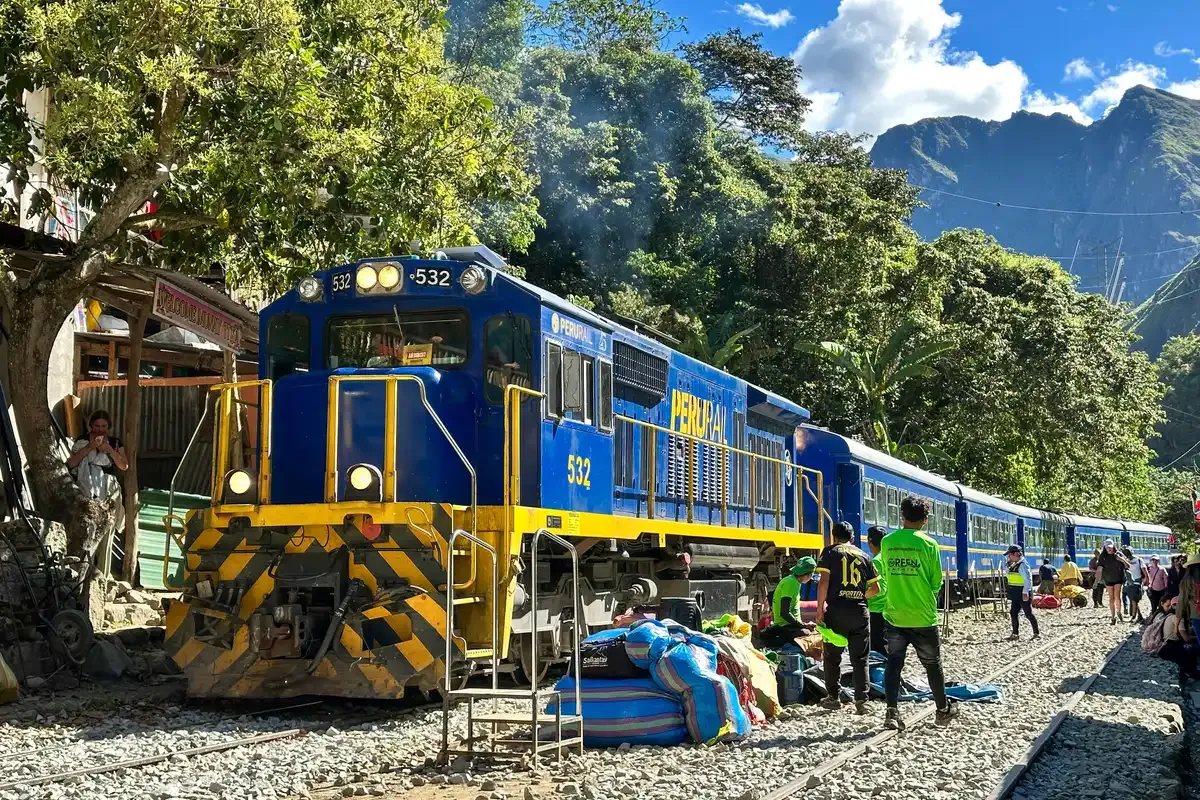
Hidroelectrica train station, where the road from Santa Teresa ends. Photo: Steve FUNG, CC BY-SA 4.0, via Wikimedia Commons
A power station first, a rail stop second
Hidroelectrica is the Central Hidroelectrica Machupicchu, a working hydroelectric power station on the Urubamba river. It sits at the end of the road from Santa Teresa, at about 1,890 m above sea level. PeruRail's own destination page describes the route as descending from about 3,400 m at Cusco down to about 1,890 m at Hidroelectrica, which gives you a sense of how far the climate and vegetation have already changed by the time you arrive. There is no town here in any real sense. The station, the rail stop, a parking area for vehicles and a handful of basic food stalls and toilets aimed at arriving trekkers are about all you will find.
So let us be clear about what this page is for. Hidroelectrica is not a sight. You do not come here to look at the turbines or to spend an afternoon. You come here because the road ends and the last stretch into Aguas Calientes, the town below Machu Picchu, begins. For budget travellers and for anyone finishing a jungle trek, this is the doorway. The two ways through it are a 30-minute local train or a flat walk beside the railway line, and both are covered below.
The Rail-Side Walk
The free option, and the one most budget travellers actually take.
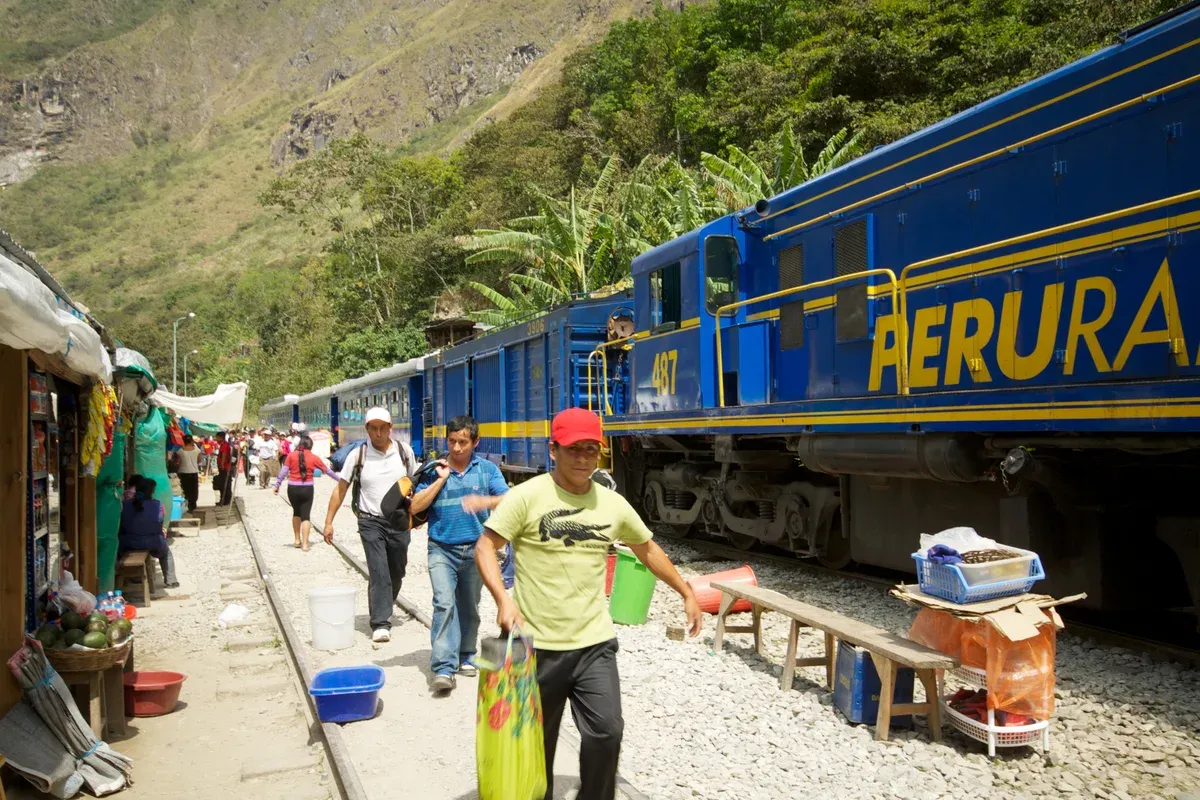
The rail-side walk from Hidroelectrica, following the tracks toward Aguas Calientes. Photo: McKay Savage from London, UK, CC BY 2.0, via Wikimedia Commons
Roughly 10 km, flat, about 2 to 2.5 hours
PeruRail's own destination page states that the walking alternative from Hidroelectrica to Machu Picchu Pueblo takes about 2 hours 30 minutes. That is the only official figure available. The commonly quoted distance of roughly 10 km comes from third-party trekking operators and travel blogs, not from any official body, so treat it as an approximation rather than a measured fact.
What all the accounts agree on is the character of the walk. It is flat, with no significant elevation gain, and it follows the railway line and the Urubamba river the whole way into town. You pass through a couple of short tunnels, so bring a headlamp or phone light even in daylight. The path is easy underfoot and the navigation is impossible to get wrong, since the track runs straight to Aguas Calientes. Most people do it in 2 to 2.5 hours depending on pace and photo stops.
Two practical notes. First, SERNANP recommends visiting the Historic Sanctuary from April to October, and the walk is far more pleasant in the dry season than in the rainy season from November to March, when the river runs high and afternoon downpours are common. Second, the walk costs nothing, which is exactly why budget travellers choose it over the train. If your legs are already spent from days of trekking, the 30-minute train is the reasonable call.
The Santa Teresa Link
Hidroelectrica does not stand alone. It is the end point of a chain that starts in Cusco and passes through one more town first.
The last town before the road ends
Santa Teresa is the last town of any size before Hidroelectrica. It sits on the overland route that runs from Cusco through Santa Maria and down into the high jungle, and it has become the staging point for this approach to Machu Picchu. Travellers overnight here, soak in its hot springs, and continue the next morning for the final hour or so of road to the power station, where the paved world ends.
This is exactly the chain that the 4-day Inca Jungle Trek itineraries follow. Those trips leave Cusco by bike and minibus, pass through Santa Maria, raft and zipline their way through the Santa Teresa area, and finish by arriving at Hidroelectrica for the final train or walk into Aguas Calientes. Independent travellers can replicate the same route using the informal colectivo and bus chain between the same towns.
One honest warning about that overland chain. No official transport authority publishes fares or schedules for the Cusco to Santa Maria to Santa Teresa to Hidroelectrica route. These are private, unregulated services with no official timetable or price list found on any government or operator site. Third-party guides quote figures in soles, but they disagree between sources, so we will not print them as facts. For a fuller picture of every overland option, see Cusco to Aguas Calientes.
SERNANP's Km 122 Access Point
A separate, official rule applies nearby if your plan involves entering the sanctuary on foot rather than by train.
Hours, rules, and what not to confuse
Near Hidroelectrica, at what SERNANP calls the km 122 access point, the Historic Sanctuary of Machupicchu has a control point used for Route 6 and the short Inca Trail options into the sanctuary. SERNANP's own page states that this access point is open from 07:30 to 16:30, from April to October. If you are entering the sanctuary on foot from the Hidroelectrica side rather than arriving in town by train, those are the hours that apply at this specific control point.
Be careful not to conflate two different things. The wider Inca Trail network has general visiting hours of 05:30 to 14:00, but those apply at a different access point on the classic route. The 07:30 to 16:30 window belongs to the km 122 access point only. The two are separate and should not be mixed up when planning.
The bigger rule is stricter still. Entry to the Inca Trail network inside the sanctuary is only permitted through SERNANP-licensed agencies. Independent trekking on the Inca Trail routes is not permitted. The ordinary rail-side walk from Hidroelectrica to Aguas Calientes is a different matter entirely, since it is a public approach path and not part of the permit-controlled Inca Trail network. But if your plan involves any of the marked Inca Trail routes from the km 122 side, you need a licensed agency. Book through one, and keep your permits and entry tickets with your passport for inspection.
Getting the Last Stretch: Train or Walk
The decision most people actually have to make at Hidroelectrica comes down to two options.
Thirty minutes on the rails or two and a half hours on foot
You have two ways to cover the final stretch from Hidroelectrica to Aguas Calientes, and the choice is really about money and energy.
The train. PeruRail runs the Hidroelectrica to Machu Picchu Pueblo service on its Expedition, Vistadome and Vistadome Observatory trains, and the ride takes approximately 30 minutes. PeruRail does not publish a fixed fare for this segment on its destination page. Instead it directs buyers to its live booking platform, where prices move with date and demand. PeruRail recommends booking at least 30 days ahead, and in busy periods that advice is worth following, because the local service has fewer departures than the main Ollantaytambo route. Exact departure times are not published on PeruRail's destination page either, so check the booking platform for the day you travel.
The walk. PeruRail itself states the walking alternative takes about 2 hours 30 minutes. Third-party sources describe it as roughly 10 km of flat path beside the railway and the river, with a couple of short tunnels, and it is free.
Our take is simple. If you have just finished four days of biking, rafting and hiking, paying for 30 minutes on a train after all that is not laziness, it is sanity. If you have arrived fresh by colectivo and want to save for the Machu Picchu entry ticket instead, walk. Both options are compared in more detail in Hidroelectrica or the train.
Your Options Compared
This is a cheapest-way-in comparison, so the organised jungle treks that finish through Hidroelectrica sit next to the plain PeruRail local train. The rail-side walk itself is free and has no bookable product, so it is covered in the guide above rather than as a row here.
The question that splits buyers is simple: do you walk the rail-side path to save money, or pay for the 30-minute train after a long day on the trail? Figures current 2026-09-25.
| Option | Kind | Price | For whom | Tip | Book |
|---|---|---|---|---|---|
| 4-Day Inca Jungle Trek to Machu Picchu: Biking, Rafting & ZiplineTravellers who want the full biking, rafting and zipline package with meals and 3 nights included | Tour | $429.00 | Travellers who want the full biking, rafting and zipline package with meals and 3 nights included | Rafting and zipline are optional add-ons at roughly $40 more, not part of the base price | Check Availability |
| From Cusco: 4-Day Inca Jungle Adventure to Machu PicchuSmall-group travellers who want the whole adventure capped at 10 participants | Tour | $560.00 | Small-group travellers who want the whole adventure capped at 10 participants | Bikes, rafts and zip-lines through an Inca jungle trail past coffee farms | Check Availability |
| 4 days/3 nights: Inka Jungle Trek to Machu PicchuTravellers who want a jungle trek combining biking, rafting, zip lining and hiking on a mid-range budget | Tour | $430.00 | Travellers who want a jungle trek combining biking, rafting, zip lining and hiking on a mid-range budget | Group capped at 15, with hotel pickup and free cancellation up to 24 hours ahead | Check Availability |
| PeruRail local train (Hidroelectrica to Aguas Calientes)Anyone with tired legs or a tight schedule who wants the 30-minute ride into town | Official | Anyone with tired legs or a tight schedule who wants the 30-minute ride into town | No fixed fare published, check PeruRail's booking platform | Official site |
Jungle Treks That Finish Through Hidroelectrica
These are the organised multi-day trips that use the Santa Teresa to Hidroelectrica approach as their final leg. Each one delivers you to the power station for the last train or walk into Aguas Calientes, with transport, guides and most meals handled for you.
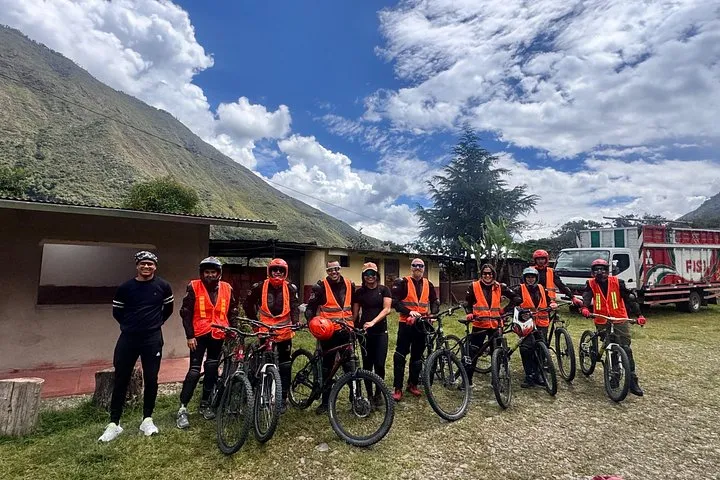 from $429.00
4-Day Inca Jungle Trek to Machu Picchu: Biking, Rafting & Zipline
Encuentros Peru Adventure bikes down from Abra Malaga, hikes through cloud forest and jungle, and includes 3 nights of accommodation, full-suspension mountain bikes with pads and helmet, and all meals. Rafting and ziplining are optional add-ons at roughly $40 more, not part of the base price.
rafting and zipline are optional extras, roughly $40 more, not included in the base $429 price
Check Availability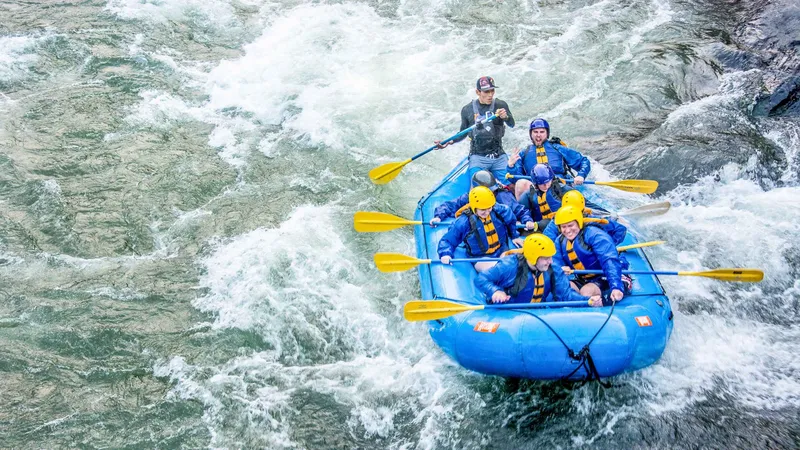 from $560.00
From Cusco: 4-Day Inca Jungle Adventure to Machu Picchu
Inkayni Peru Tours bikes, rafts and zip-lines through an ancient Inca jungle trail past coffee farms on the way to Machu Picchu, with hotel pickup and a small group capped at 10. Cancel up to 24 hours ahead for a full refund.
Check Availability from $430.00
4 days/3 nights: Inka Jungle Trek to Machu Picchu
Libertrek combines mountain biking, rafting, zip lining and hiking across 4 days on what the operator calls one of the most beautiful alternative routes to Machu Picchu, with a small group capped at 15 and hotel pickup. Cancel up to 24 hours ahead for a full refund.
Check AvailabilityPrices, ratings and details are the platform's own. Dollar figures are the listed prices. The platform bills in your account's currency.
Plan the Rest of the Trip
The Full Overland Chain
How the Cusco to Santa Maria to Santa Teresa route works, and what is and is not officially published about it.
Train or Walk, in Depth
A closer comparison of the 30-minute train against the free rail-side path.
The Jungle Trek Itself
Day-by-day detail on the biking, rafting and hiking route.
Hidroelectrica on the Map
Hidroelectrica Questions
What exactly is Hidroelectrica?
It is the Central Hidroelectrica Machupicchu, a working hydroelectric power station on the Urubamba river at the end of the road from Santa Teresa, at about 1,890 m elevation. It also has a PeruRail rail stop. It is not a tourist attraction in itself. Travellers pass through it because it is the overland jumping-off point for the last stretch into Aguas Calientes, the town below Machu Picchu.
How long is the walk from Hidroelectrica to Aguas Calientes?
PeruRail's own destination page states the walking alternative takes about 2 hours 30 minutes. Third-party trekking operators and travel blogs describe the walk as roughly 10 km, flat, alongside the railway line and the Urubamba river, with a couple of short tunnels, taking about 2 to 2.5 hours depending on pace. The 10 km distance figure is not officially confirmed by any government or rail operator, so treat it as an approximation.
How much does the train from Hidroelectrica to Aguas Calientes cost?
No fixed fare is published. PeruRail's own Hidroelectrica destination page does not state a price and directs buyers to its live booking platform, where fares move with date and demand. The ride itself takes approximately 30 minutes on PeruRail Expedition, Vistadome or Vistadome Observatory services, and PeruRail recommends booking at least 30 days ahead.
How do I get to Hidroelectrica from Cusco overland?
Independent travellers use a chain of informal colectivos and buses running Cusco to Santa Maria, Santa Maria to Santa Teresa, and Santa Teresa to Hidroelectrica. Here is the honest finding: no official transport authority publishes fares or schedules for these legs. They are private, unregulated services with no official timetable or price list found on any government or operator site, so any price quoted online is third-party and unverified.
Which treks go through Hidroelectrica?
The 4-day Inca Jungle Trek itineraries, which combine biking, hiking, rafting and ziplining from Cusco via Santa Maria and Santa Teresa, use Hidroelectrica as their finish line, arriving there for the final train or walk into Aguas Calientes. By contrast, treks on the classic and short Inca Trail routes do not pass through Hidroelectrica at all.
Can I hike into the sanctuary on the Inca Trail from the Hidroelectrica side on my own?
No. SERNANP states that entry to the Inca Trail network inside the Historic Sanctuary of Machupicchu is only through SERNANP-licensed agencies, and independent trekking is not permitted. The km 122 access point near Hidroelectrica, used for Route 6 and the short options, is open 07:30 to 16:30 from April to October. Do not confuse those hours with the wider Inca Trail network's general hours of 05:30 to 14:00, which apply at a different access point. The ordinary rail-side walk to Aguas Calientes is not part of the permit system and is free to use.
When is the best time to use the Hidroelectrica route?
SERNANP recommends visiting the Historic Sanctuary from April to October, and the same logic applies to the Hidroelectrica approach, since the rail-side walk and the unpaved road from Santa Teresa are far more pleasant in the dry months. The rainy season runs from November to March, when downpours are frequent and the river runs high. Whatever month you choose, book the local train early if you want it, because PeruRail recommends at least 30 days of lead time.
Hidroelectrica in Video
Hiking to Machu Picchu | Hidroelectrica (No One Talks About This Route)
A first-hand account of the rail-side walk this page describes.
Video: Paige WandersIdyllic Walk from Hidroelectrica to Aguas Calientes (Machu Picchu Town)
Shows the flat, rail-side terrain along the route.
Video: Mystic Music TravelHiking the Train Tracks to Machu Picchu (Hidroelectrica)
Another walkthrough of the same rail-side path.
Video: Gabriel TravelerPrices, hours and terms are set by the venue or operator and confirmed at checkout.
We may earn a commission if you book through one of our links, at no extra cost to you. Full affiliate disclosure