 Aguas Calientes City Guide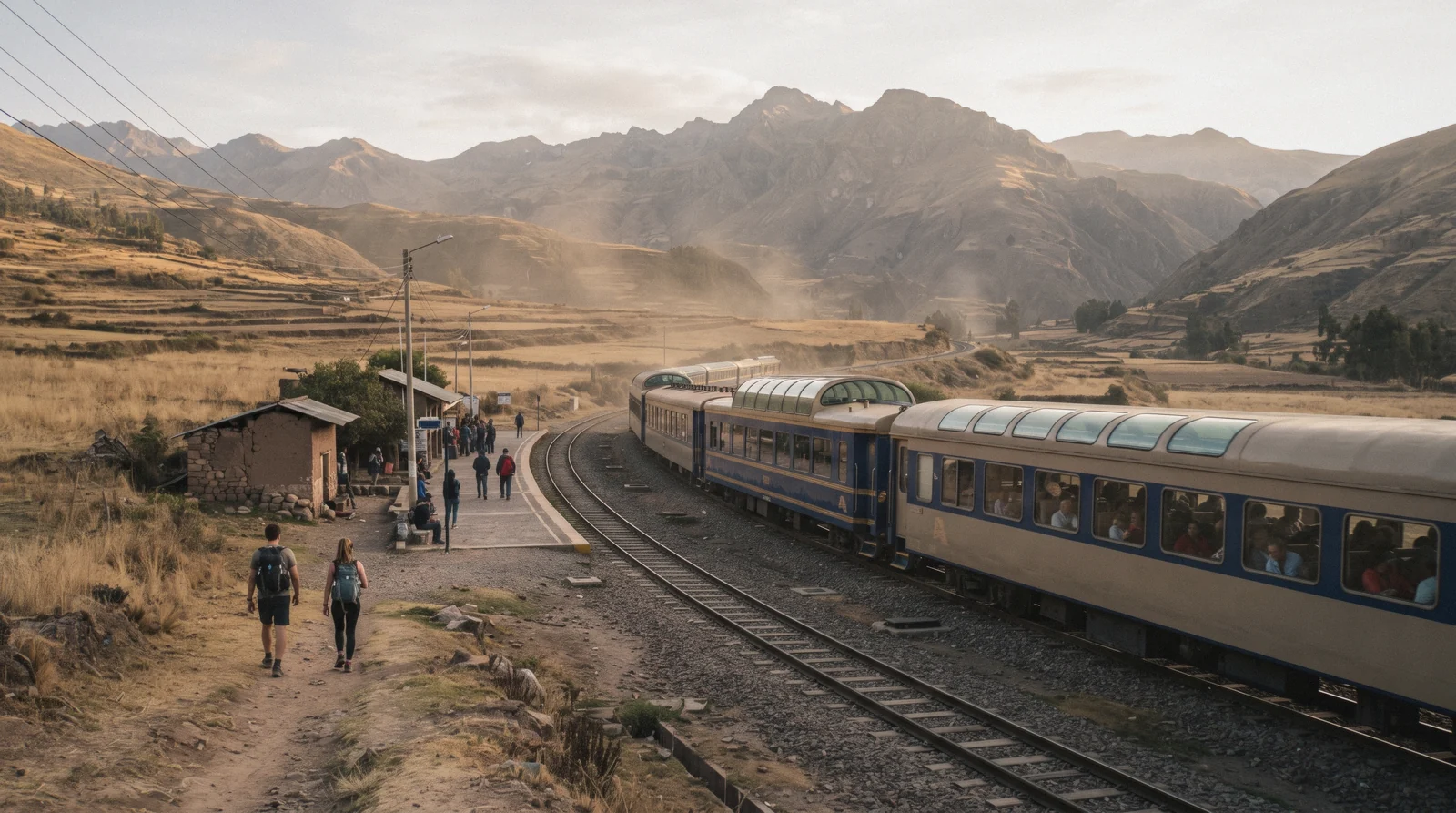
Cusco to Aguas Calientes: Every Way to Get There
Cusco to Aguas Calientes is a trip with no road: Aguas Calientes, officially Machu Picchu Pueblo, is the railway town in the Vilcanota gorge below Machu Picchu, and every route from Cusco ends the same way, on a train platform or a dirt path. How you get to that point varies a lot in time, cost and effort. This page lines up the direct train, the cheaper Ollantaytambo route, the budget Hidroelectrica overland chain, and trekking in on foot, with sourced times only. For what to do once you arrive, see things to do in Aguas Calientes, and for booking a seat, browse Aguas Calientes tours.
Quick answer Every way from Cusco to Aguas Calientes
No road reaches Aguas Calientes, so the fastest option is the direct train from Poroy Station in Cusco, which takes about 3 hours 30 minutes to reach Machu Picchu Station in the town. Trains from San Pedro Station take about 4 hours 30 minutes. Budget travellers can ride a bus or shared van part of the way, then walk in from Hidroelectrica. Trekkers can enter on foot through the Inca Trail network.
Key takeaways
- Compare every train and walking route below, then see the best things to do in Aguas Calientes once you arrive.
- The direct train is the simplest option. Check train to Machu Picchu tours to book a seat in advance.
- You also need a citadel ticket. Read how Machu Picchu tickets work before you travel.
Every Way From Cusco to Aguas Calientes, Compared
Aguas Calientes, officially Machu Picchu Pueblo, sits at about 2,040 m in a deep gorge of the Vilcanota river, roughly 111 km by rail from Cusco at about 3,400 m. No road reaches the town, so every arrival is by train or on foot. The route you choose is a trade between time, money and effort, and the four options below cover the whole range from a reserved seat on a direct train to a multistage overland trip with a riverside walk at the end. Figures current 2026-09-25.
Route comparison at a glance
| Route | Time | Who it suits |
|---|---|---|
| Direct train from San Pedro Station, Cusco | About 4 hours 30 minutes | Anyone staying near central Cusco who wants the shortest transfer to the platform |
| Direct train from Poroy Station, Cusco | About 3 hours 30 minutes | Travellers who value the shorter ride and do not mind a 20-minute trip out of town first |
| Bus or colectivo to Ollantaytambo, then train | Roughly 1 hour 30 minutes by road plus about 2 hours 10 minutes by train (60 km) | Budget-conscious travellers happy to arrange two legs themselves |
| Overland via Santa Maria and Santa Teresa to Hidroelectrica, then train or walk | Not officially timetabled. The final train leg takes about 30 minutes, or a reported 10 km walk of 2 to 2.5 hours | Travellers on the tightest budgets or those combining the trip with a jungle or Santa Teresa trek |
| Trekking in on the Inca Trail network | Route 1 is 33.7 km, typically 4 to 5 days. Access bus Cusco to Piscacucho (km 82) is 85 km, about 2 hours 30 minutes | Hikers who want the arrival on foot and hold a licensed-agency permit |
The Direct Train: San Pedro or Poroy
PeruRail runs trains to Machu Picchu Station in the town from two Cusco-area stations. Both deliver you to the same platform on the riverbank in Aguas Calientes, a short walk from the hotels and restaurants. The difference between them is location versus ride time, so your choice usually comes down to where you are staying and how much train time you want.
San Pedro Station
San Pedro Station sits on Calle Cascaparo, only about 5 minutes from downtown Cusco, which makes it the easiest platform to reach if your hotel is in the historic centre. The trade-off is ride time. PeruRail states the journey from San Pedro to Machu Picchu Station takes about 4 hours 30 minutes, the longest of the direct train options.
SERNANP's own access table puts the Cusco to Machu Picchu Pueblo rail leg at 111 km and about 4 hours 10 minutes, which gives you the same picture from an official source. The line descends steadily from Cusco's high plateau toward the Urubamba valley. Pack light either way.
Both PeruRail and Inca Rail cap carry-on luggage at 8 kg (17.6 lb), about 115-118 linear cm, so a large suitcase will not board. Free luggage storage is available at Ollantaytambo and Machu Picchu stations if you are splitting the journey, covered in full on our luggage storage page.
Poroy Station
Poroy Station is on Calle Roldan in the district of Poroy, about 20 minutes from downtown Cusco, so you need a taxi or transfer to reach it. In exchange, PeruRail states the ride from Poroy to Machu Picchu Station takes about 3 hours 30 minutes, a full hour shorter than the San Pedro departure. The same station also serves intermediate stops, with PeruRail listing about 1 hour 40 minutes from Poroy to Ollantaytambo, useful if you later want to break the trip in the Sacred Valley.
On arrival at Machu Picchu Station you are in the town itself, not at the citadel gate, which sits on the ridge above; most visitors take the bus up, though it is roughly 6 km or a 90-minute walk to the entrance if you prefer to climb on foot. Whichever station you pick, book the train well ahead. Seats on this corridor are limited and sell out in busy periods.
The Cheaper Route: Bus or Colectivo to Ollantaytambo, Then Train
This is the pattern most independent travellers in Peru use. You ride a public bus or shared van from Cusco to the town of Ollantaytambo in the Sacred Valley, then board the train there for the final leg through the gorge to Aguas Calientes. Splitting the journey this way shortens the train to its cheapest segment.
How the two legs work
The road leg is straightforward in principle. Buses and colectivos (shared vans) run from Cusco to Ollantaytambo through the Sacred Valley, and PeruRail's own FAQ notes Ollantaytambo Station is about 1 hour 30 minutes by car from downtown Cusco. The train leg from Ollantaytambo to Machu Picchu Pueblo covers 60 km and takes about 2 hours 10 minutes per SERNANP's access table.
You can book just this train segment with PeruRail or Inca Rail and arrive at the same Machu Picchu Station in town. One thing to state plainly: no official body publishes fares or timetables for the Cusco-Ollantaytambo bus or colectivo leg. It is informal transport, priced in cash at the door.
People do this to save money against a through-train from Cusco, and it generally works, but you are arranging two tickets instead of one. Read our full guide to the Ollantaytambo to Aguas Calientes train for the rail leg.
Why many travellers choose it
The appeal is flexibility and cost. You can spend a night in the Sacred Valley, a region worth a day on its own, and take a morning train that would be impossible from Cusco without a very early start. Ollantaytambo also has more frequent departures than the Cusco stations, and PeruRail offers free luggage storage there from 04:15 to 21:00 if you want to leave a large bag behind while you visit the citadel.
The downside is logistics. You carry your bags onto public transport, find the correct departure point in Cusco without a posted schedule, and accept the small risk that a road delay eats into your train time. Leave a generous buffer between the two legs.
The Budget Route: Overland to Hidroelectrica, Then Walk or Ride
The cheapest way into Aguas Calientes is also the longest. A chain of buses and shared taxis runs overland from Cusco through Santa Maria and Santa Teresa to Hidroelectrica, the hydroelectric station at the end of the road, from where the town is either a short train ride or a flat walk along the tracks.
The overland chain
The route runs Cusco to Santa Maria, Santa Maria to Santa Teresa, and Santa Teresa to Hidroelectrica, mostly on mountain roads through the high jungle. No official authority publishes fares or schedules for any of these legs. They are informal colectivo and bus services with no fixed timetable, and third-party guides disagree on both prices and durations, so we will not quote figures for them here.
What can be said is that the full chain is a long day or more of travel, and PeruRail notes the descent from about 3,400 m at Cusco to about 1,890 m at Hidroelectrica, so you finish far lower and warmer than you started. Book through a trusted agency rather than flagging vehicles at random. Our Hidroelectrica guide covers the station itself in detail.
The last stretch: train or walk
From Hidroelectrica station you have two ways into town. PeruRail runs a short service on its Expedition, Vistadome and Vistadome Observatory trains that takes about 30 minutes to Machu Picchu Pueblo. No fixed fare is published on PeruRail's own page for this segment.
The alternative is walking. PeruRail itself describes the walking option as taking about 2 hours 30 minutes, and third-party trekking sources report the walk as roughly 10 km, flat and easy, following the railway line and the Urubamba river with a couple of short tunnels; that 10 km distance figure is not an official measurement. Read our comparison of Hidroelectrica or the train if you are weighing the two.
Trekking In on Foot
The fourth way to reach Aguas Calientes is under your own power, arriving through the mountains on the Inca Trail network inside the Historic Sanctuary of Machu Picchu.
The classic Inca Trail
Entry to the Inca Trail network is only possible through SERNANP-licensed agencies. Independent trekking is not permitted, so you must book a guided group or private trek in advance. The main route, Route 1 or the Main Inca Trail, is 33.7 km long, typically walked over 4 to 5 days.
It begins at Piscacucho (km 82), reached by tourist-agency bus from Cusco, a drive of 85 km taking about 2 hours 30 minutes per SERNANP's access table, then crosses the trail's high pass before descending through cloud forest to the citadel. The SERNANP entry fee for the 4 to 5 day routes is US$86.00 (S/292) for adults, charged on top of your Machu Picchu citadel ticket, which trekkers also need. Visiting hours for the trail network run 05:30 to 14:00, and permits are limited and sell out months ahead in the dry season.
Shorter alternatives exist too, including one-day versions of the trail and multi-day jungle treks that reach the town via Santa Teresa and Hidroelectrica. Once in town, see our list of things to do in Aguas Calientes.
Which Route Should You Pick
There is no single best answer, only the best answer for your dates, budget and legs.
Match the route to your trip
If you are time-pressed, book the direct train from Poroy and keep the whole transfer at about 3 hours 30 minutes, or skip the planning entirely with a full-day tour from Cusco that handles every leg for you. If you are travelling on a budget, take the bus or colectivo to Ollantaytambo and the short train from there, or push further and use the overland route to Hidroelectrica, accepting that neither informal leg is officially priced or timetabled and both need flexibility in your schedule. If you are adventurous and book months ahead, trek the classic Inca Trail with a licensed agency and earn the arrival on foot, or choose a two-day version if four days and the permit scramble do not fit your trip.
Whichever you pick, every option ends at the same riverside platform or the same dirt path, and from there the bus or the stair path is the only way up.
Tours and Trains From Cusco
These bookable options cover the main ways of making the journey, from a simple train seat to a four-day trek. Prices are per person in USD.
 from $130.00
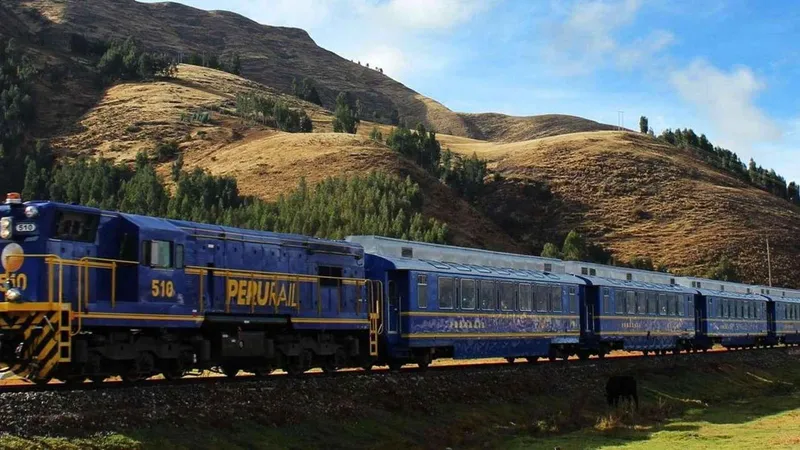
Train to Machu Picchu
Trip Tour books the scenic train ride from Cusco toward Aguas Calientes, the gateway to Machu Picchu, with pickup included. Cancel up to 24 hours ahead for a full refund, and note that availability is limited on this route.
Check Availability from $332.00
From Cusco: Full-Day Group Tour of Machu Picchu
Peru Andes Top runs a full 12-hour day from Cusco, small group, with hotel pickup, and the tour is non-refundable once booked. It's the most-reviewed Machu Picchu day trip on this list by a wide margin.
Check Availability from $470.00
Cusco: 4-Day Inca Trail to Machu Picchu with Accommodation
Inkas Expeditions runs this as a biking and hiking route rather than the classic hiking-only Inca Trail, with biking at Abra Malaga, a coffee-roasting stop and the Cocalmayo thermal baths along the way, plus meals and 3 nights of accommodation. Small group, capped at 15 travelers, and non-refundable once booked.
Check Availability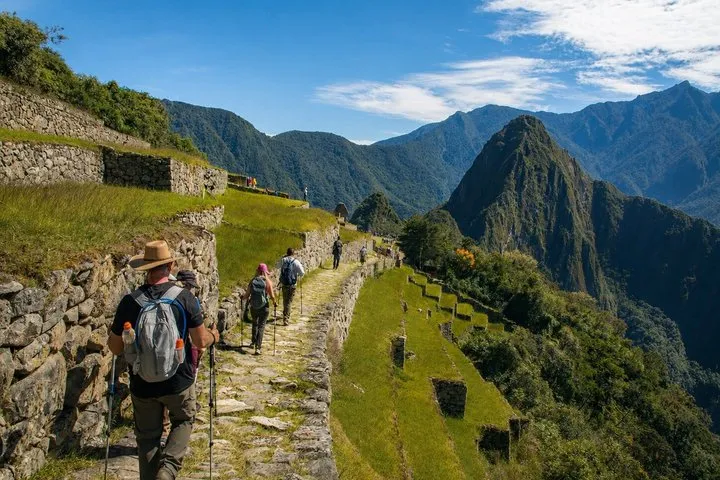 from $590.00
2-Day Inca Trail to Machu Picchu with VistadomeTrain
TreXperience takes the train to Km 104, hikes past Chachabamba and Wiñaywayna to the Sun Gate for a sunset view, and overnights in a shared twin room at a 3-star hotel before touring the citadel the next day. Safety gear including a satellite phone, first-aid kit and oxygen tank is carried on the hike.
Check AvailabilityPrices, ratings and details are the platform's own. Dollar figures are the listed prices. The platform bills in your account's currency.
Plan the Rest of the Trip
Ollantaytambo to Aguas Calientes Train
The most-used rail segment on the route, with operators, times and how to book the 60 km ride through the gorge.
Aguas Calientes Train Station
What to expect when you step off at Machu Picchu Station, from luggage storage to the walk into town.
Aguas Calientes Tours
Guided visits, day trips and treks that include the town, compared and priced.
Frequently Asked Questions
How do you get from Cusco to Aguas Calientes?
By train or on foot, because no road reaches the town. The direct train leaves from San Pedro Station (about 5 minutes from downtown Cusco) or Poroy Station (about 20 minutes away) and arrives at Machu Picchu Station in the town. You can also ride a bus or colectivo to Ollantaytambo and take the train from there, travel overland via Santa Maria and Santa Teresa to Hidroelectrica and then walk or take a short train, or trek in through the Inca Trail network with a licensed agency.
How long is the train ride from Cusco to Aguas Calientes?
PeruRail states about 4 hours 30 minutes from San Pedro Station and about 3 hours 30 minutes from Poroy Station. SERNANP's access table puts the Cusco to Machu Picchu Pueblo commercial train at 111 km and about 4 hours 10 minutes. Trains from Ollantaytambo take less time, about 2 hours 10 minutes for the 60 km leg.
Is Aguas Calientes worth visiting?
Yes, for most travellers it is unavoidable rather than optional, since every visit to Machu Picchu starts and ends in the town. It is also worth staying a night: you can enter the citadel early and visit the hot springs, river walks and markets without day-trip crowds. Our things to do in Aguas Calientes guide covers the options.
When should I avoid the journey?
SERNANP recommends visiting between April and October and notes the rainy season runs November to March, when trails are wet and landslide risk on the rail line is higher. Both PeruRail and Inca Rail suspended service on the Ollantaytambo to Machu Picchu Pueblo route for a day in August 2026 after a fire and rockslide near km 107, the kind of disruption more likely in heavy rain. Crowds also peak in the high season, when daily capacity rises from 4,500 to 5,600 visitors.
Can I drive from Cusco to Aguas Calientes?
No. There is no road to the town, so a car or bus can only take you part of the way, to Ollantaytambo for the train or overland to Hidroelectrica for the walk or short train ride. The final approach to Aguas Calientes is always by rail or on foot.
How much luggage can I take on the train?
Both PeruRail and Inca Rail cap carry-on luggage at 8 kg (17.6 lb) and about 115-118 linear cm, one piece per ticket. There are no luggage racks in the carriages. PeruRail offers free storage at Ollantaytambo and Machu Picchu stations, while Inca Rail runs a paid custody service at its Ollantaytambo office only. Full detail on our luggage storage page.
Which route is cheapest?
The overland route to Hidroelectrica is the cheapest overall, since no official body prices or timetables the Cusco to Santa Maria to Santa Teresa chain and the final 30-minute PeruRail train from Hidroelectrica has no fixed published fare. The bus or colectivo to Ollantaytambo plus the train from there is the next option down. Both save money against a through-train from Cusco at the cost of time and logistics.
Videos: The Journey From Cusco
Everything you need to know about BOTH TRAINS to Machu Picchu!
Compares the San Pedro/Poroy and Ollantaytambo train options covered on this page.
Video: Nicole Lazo TravelPeruRail Expedition | Train from Cusco to Machu Picchu
A full ride-along on the direct Cusco train service.
Video: Jack and Gab ExploreFirst Class on Peru's Luxury Train to Machu Picchu
Shows the top end of the direct-train option for contrast with the budget routes.
Video: Lexie LimitlessPrices, hours and terms are set by the venue or operator and confirmed at checkout.
We may earn a commission if you book through one of our links, at no extra cost to you. Full affiliate disclosure