 Aguas Calientes City Guide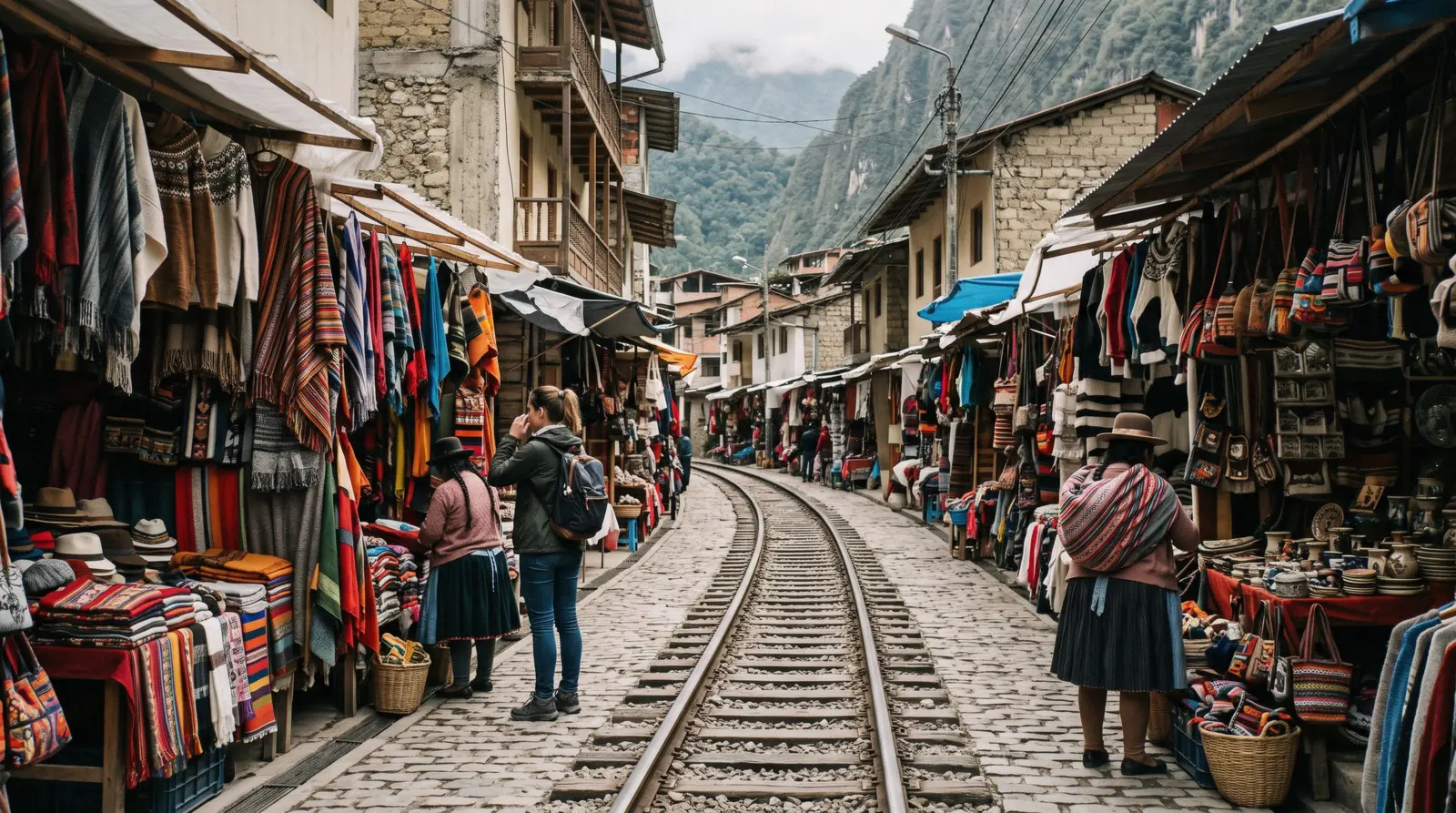
The Artisan Market in Aguas Calientes
Almost everyone who visits Machu Picchu walks through the Aguas Calientes market without planning to. The Mercado Artesanal sits right beside the train station, and the station building itself is reported by tour operators to sit inside or directly against the market structure, so you pass rows of textile stalls before you even reach the platform. It is the town's main shopping spot for alpaca-wool sweaters, wall hangings, ceramics, silver pieces and small Inca-themed souvenirs. Entry is free and browsing costs nothing. This page explains what is sold, what the honest expectations are on prices and hours, and where the market fits into the tiny riverside town of Machupicchu Pueblo, as Aguas Calientes is officially called.
Quick answer Market hours, entry cost and location at a glance
The artisan market is free to enter and sits beside the Aguas Calientes train station. Hours are not confirmed on any official municipal page. One tour operator reports it opens daily, holidays included, from 8:00 a.m. to 6:00 p.m., but treat that as a single unverified report rather than an official schedule. Vendors price items individually and goods here are generally described as more expensive than in Cusco.
Key takeaways
- See things to do in Aguas Calientes for the rest of the town
- Compare prices with our where to eat guide
- No ticket is needed, unlike Machu Picchu entry
Key facts
Opening hours
| Market stalls | Not confirmed on an official municipal page. One tour operator reports daily 8:00 a.m. to 6:00 p.m. |
|---|
Admission
- Free
- Free to browse, no entry fee. Goods are individually priced by vendors
Planning it
- Time needed
- Not officially stated
- Address
- Avenida Imperio de los Incas, next to the train station, Machupicchu Pueblo (Aguas Calientes), Cusco Region, Peru
Visiting the Market
The table below covers the practical terms of a visit. It is short because the market imposes almost none. There is no entry fee, no booking, no time slot and no identification requirement. The one genuinely open question is the opening schedule, which no official municipal page confirms, so the table states that plainly rather than inventing hours.
No ticket of any kind applies here. This is a free public market, so the only planning questions are when to go and how much time to allow.
| Option | Price | Hours | Source | Book |
|---|---|---|---|---|
| Browse the marketAny visitor | Free entry, vendors price items individually | Not officially confirmed; one operator reports 8:00 a.m. to 6:00 p.m. daily | No official municipal page confirms hours | Official site |
Municipal sources for Machupicchu Pueblo publish no market hours, and the only schedule in circulation is a single tour operator's reported estimate.
Guided Options Near the Market
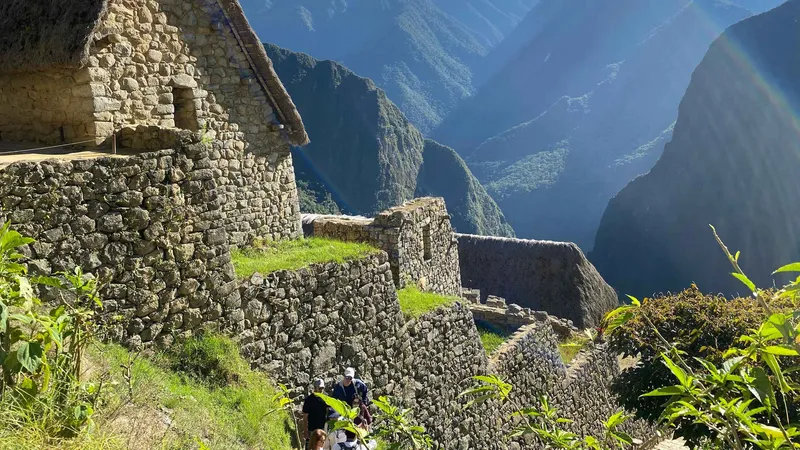
No tour on this site covers the market itself, since it is free to enter and nobody sells access. The closest bookable option is a guide for the ruins up the hill, which most visitors pair with a stop at the market on the way to or from the station.
 from $30.00
Machu Picchu: Group Guided Tour
This is a guide-only group tour, limited to 10 people, and it does not include the Machu Picchu entrance ticket, so book that separately before your date. Cancel up to 24 hours ahead for a full refund, and pay nothing until your spot is confirmed.
Check AvailabilityPrices, ratings and details are the platform's own. Dollar figures are the listed prices. The platform bills in your account's currency.
What the Market Is
A Market Built Around the Railway
Aguas Calientes has no road access. Per Wikipedia, the town can only be reached by train or on foot, and it grew from a small farming settlement founded in 1901 into a railway workers' camp known as Maquinachayoq during construction of the line, which was finished in 1931. The train made the town and the train still defines it.
The artisan market grew up around that same station. Tour-guide sites report that the station sits inside or directly adjacent to the market building, so the flow of arriving and departing passengers passes the stalls constantly. Wikipedia describes Avenida Pachacutec as the town's main and only thoroughfare, running from the hot springs at one end to the main square at the other, near the train station.
The market sits at the station end of that axis, which makes it the first and last thing most visitors see.
The Main Square Next Door
At the far end of Avenida Pachacutec from the baths sits the town's main square, a short walk from the market and the station. Several independent visitor guides name the main square as Plaza Manco Capac, with a statue of the same name and a small church nearby, reported as the Iglesia Virgen del Carmen, though no official municipal source confirms these names. We mention them because they help you orient yourself, not because we can vouch for the labels.
In practice you will recognise the square as the open plaza with the statue where local paths converge. Treat the market and the square as one short stroll. There is no need to plan them as separate stops, and no entrance fee or formal visiting arrangement applies to either.
What Is Sold and What to Know
What the Stalls Carry
According to tour-guide sites that describe the market, the stock is the classic Peruvian highland handicraft range: sweaters and textiles made from alpaca wool, woven wall hangings, ceramic pieces, silver jewellery and small items, and Inca-themed trinkets and whistles. Quality varies from stall to stall, and much of the stock will look familiar if you have already walked the markets of Cusco or the Sacred Valley, because the same product categories travel through the whole region. The practical difference is location.
The same sources that describe the market generally note that prices here run higher than in Cusco, which is an unsurprising consequence of a town that everything must reach by rail or on foot. Present prices are set by individual vendors and are not published anywhere online, so no specific figure on this page is a verified market price.
Bargaining, Budget Eating and Honest Expectations
Vendors price items individually and haggling is a normal part of shopping in Peruvian artisan markets, though no source in our research documents specific discount norms for this market, so we make no claim about how far prices move. The widely repeated observation that goods cost more than in Cusco is worth taking seriously before you buy a heavy alpaca sweater here. One tour operator reports that food stalls in the market serve menu-of-the-day set meals starting around $3.53 (S/12), a figure we pass on as exactly that, one operator's reported number rather than a confirmed price.
It is mainly a useful pointer that cheap eating exists near the station if you know to look for it. For a fuller picture of the town's food, see our guide to typical food in Aguas Calientes and our where to eat recommendations.
When to Go and How Long to Allow
There is no confirmed market day. No evidence points to a single weekly market day, and the artisan stalls appear to run daily if the one operator's reported hours of 8:00 a.m. to 6:00 p.m., holidays included, hold true. That estimate is plausible given the market's dependence on train schedules, but we cannot confirm it.
What we can say from the market's position is that crowds track the trains. The stalls are busiest around arrival and departure times, when day-trippers stream through with luggage. If you want quieter browsing, aim for a window between trains.
Time needed is not stated by any official source, but the market is compact and most visitors pass through it in minutes and stop longer only if shopping. It is not a destination in itself, it is a convenient part of a town you will likely be in anyway.
Where the Market Is
The map pin shows the market's position on Avenida Imperio de los Incas next to the train station, based on OpenStreetMap community mapping used for the pin location only.
Coordinates come from OpenStreetMap community mapping and are used for the map pin only. They do not confirm operating status. The town is small and the market is easy to find on foot from the station or the main square.
Near the Market
Machu Picchu Train
The market sits at the station, so it pairs naturally with arriving or departing by rail on the town's only means of access.
Aguas Calientes Hot Springs
The thermal baths that gave the town its name sit at the other end of Avenida Pachacutec from the market.
Where to Eat
Restaurant and food-stall guidance for a town where everything, including the ingredients, arrives by train.
Aguas Calientes Market Questions
What are the Aguas Calientes market hours?
No official municipal page confirms the market's opening hours. One tour operator reports that it opens Monday to Sunday, including holidays, from 8:00 a.m. to 6:00 p.m. That is a single reported estimate from a non-official source, so treat it as indicative and expect the stalls that matter most to you to be open whenever trains are running.
Is there a market day in Aguas Calientes?
There is no evidence of a single specific weekly market day. The artisan stalls appear to run daily, consistent with the one operator's reported daily hours. This is a permanent tourist market serving train passengers rather than a rotating village market, so you do not need to time your visit to a particular day.
Is the Aguas Calientes market free to enter?
Yes. The market is free to enter and free to browse, with no ticket or booking of any kind. You only spend money if you buy something, and vendors price items individually.
Is the market cheaper than Cusco?
Generally no. Tour-guide sources commonly describe prices at the market as higher than in Cusco's markets, which reflects the cost of getting goods into a town with no road access. If you have already bought your textiles and souvenirs in Cusco, there is little reason to expect a better deal here.
What is Aguas Calientes famous for?
The town is known for the natural hot springs that gave it its colloquial name, Aguas Calientes meaning hot waters, and for being the gateway town to Machu Picchu, since trains and footpaths are the only ways in. The artisan market is a byproduct of that role, sitting where the passengers arrive.
Is there anything to do in Aguas Calientes besides the market?
Yes. The town offers the hot springs, the riverside walk toward the Mandor waterfall, the Putucusi mountain trail at the town's edge and the Machu Picchu site museum near the bridge, plus the plaza and market described here. See our full list of things to do in Aguas Calientes for details.
Prices, hours and terms are set by the venue or operator and confirmed at checkout.
We may earn a commission if you book through one of our links, at no extra cost to you. Full affiliate disclosure