 Aguas Calientes City Guide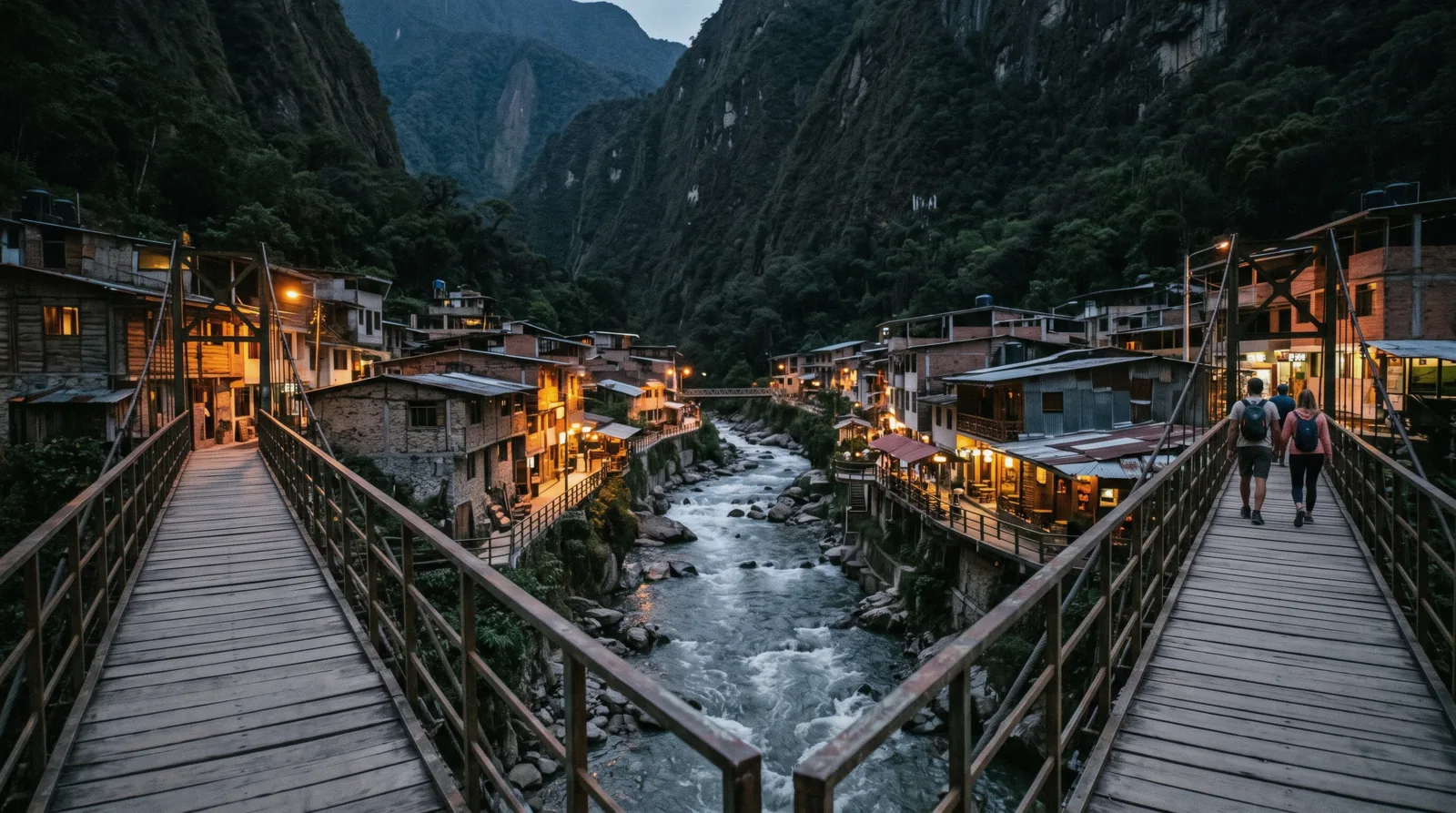
Is Aguas Calientes Worth It? An Honest Look Before You Book
Aguas Calientes exists because of Machu Picchu, not as a destination in its own right. The town, officially called Machupicchu Pueblo, grew out of a railway workers' camp on the Vilcanota River and its entire economy points one direction: up the mountain. So the honest question, is aguas calientes worth it, is not whether the town charms you on arrival. It is whether sleeping here, rather than day-tripping from Cusco or Ollantaytambo, earns its cost in time and money. This page gives the case for and the case against in plain terms. It covers what an overnight actually buys you, what the detour costs, and how the same-day alternative stacks up. For the practical layer behind this decision, see Machu Picchu tickets, where to stay and our page on the Machu Picchu day trip from Cusco.
Quick answer The short verdict on whether Aguas Calientes is worth it
For most travellers, yes, one night is worth it if the budget allows. Staying in Aguas Calientes puts you about 390 vertical metres below the Machu Picchu gate, so you can take the first buses up and be near the front of a 06:00 or 07:00 slot without a pre-dawn train. The core costs on this site are the entrance ticket at US$43.00, the bus at US$19.00 and a guided group tour at US$30.00, before trains and a hotel. Against that, the town has no road access, and train times from Cusco run about 4h10m each way, so a day trip burns roughly 8h20m in transit for one 2h30m circuit. If your budget is tight or you only want the classic photo, a day trip still works. If you want the calmest first hour at the site, the overnight earns its keep.
Key takeaways
- A night in town buys you early, unhurried access to a 06:00 or 07:00 entry slot.
- Budget the core trio first: ticket, bus and guide, then trains and a room. See our Aguas Calientes costs breakdown.
- The town itself is functional, not a sight. See things to do in Aguas Calientes for the short honest list.
- Timing matters as much as base. Check the best time to visit Machu Picchu.
The Case For and Against
Both options reach the same citadel. The difference is what the hours around your entry slot look like, and what they cost.
| Angle | For staying in Aguas Calientes | Against staying in Aguas Calientes |
|---|---|---|
| Time | You sleep about 390 m below the gate and queue for the first bus, so a 06:00 or 07:00 slot is easy. No 4h10m train before dawn. | You spend an evening and a morning in a town with limited things to do. Total trip time from Cusco is longer than a same-day dash if you count both travel days. |
| Money | You can take the cheapest early train from Ollantaytambo and a basic room, and skip a second long travel day. | Hotel and restaurant rates in town are largely not published, so budgeting is harder than pricing a day trip from Cusco. |
| Altitude and comfort | The town sits at about 2,040 m and the gate at 2,430 m, both below the CDC moderate band that starts at 2,450 m, so most people feel fine. | Getting here usually means passing through Cusco at about 3,399 m, which sits in the CDC high band, so altitude symptoms are more likely in Cusco than in the gorge. |
| What there is to do | Hot springs that gave the town its name, the site museum free from 12:00 to 16:00 near Puente Ruinas, and riverside walks. | That short list is close to the whole list. The town was built as a railway camp in 1931 and nearly everything is aimed at Machu Picchu visitors. |
Our own comparison of the published times and the price cards on this site. Train times are the operators' and SERNANP's published figures.
What an Overnight Actually Buys You
The argument for sleeping in the gorge is not the town. It is the shape of your day at the citadel.
An Early Slot Only a Bed in Town Gives You
Entry to Machu Picchu runs in hourly slots from 06:00 to 15:00, and the standard rule gives you 2 hours 30 minutes inside with no re-entry. On a day trip from Cusco, the train alone takes about 4h10m each way per SERNANP, so reaching an early slot means leaving your hotel in the dark and accepting a midday entry at best. Sleep in Aguas Calientes and the gate is a short bus ride up the switchbacks, about 390 m above town on our sum of the published elevations.
You can queue for the first buses, walk in near the front of a 06:00 or 07:00 window, and get your 2h30m while the terraces are at their quietest. The daily cap is 4,500 visitors, rising to 5,600 in high season, and those people all compress into the same slots, so the first hours carry real value. For slot strategy, see Machu Picchu tickets.
The Town Itself, Briefly
What is Aguas Calientes like? Functional, steep and built around one purpose. The settlement began in 1901 with a few farming families and became a railway construction camp known in Quechua as Maquinachayoq, meaning place with a little train, until the line was finished in 1931.
The district was created on 1 October 1941, and the 2017 census counted 4,525 residents. The town sits at about 2,040 m on the Vilcanota River, below the CDC's moderate altitude band, which most people notice as easy breathing compared with Cusco. Attractions in town are limited and worth being honest about: the natural hot springs that gave the place its Spanish name, for which no official hours or fee are published, and the Manuel Chavez Ballon site museum near Puente Ruinas, free between 12:00 and 16:00.
That is genuinely most of it, so treat the town as a base rather than a destination. See things to do.
What the Detour Costs You
The honest drawbacks are structural. No road reaches the town, and the whole local economy runs on visitors heading to one site.
No Road, and What That Means
No road reaches Aguas Calientes. Arrival is only by train or on foot, which is the single biggest fact about the town. It means every arrival and departure is priced at rail rates, your luggage is limited to one carry-on of up to 8 kg on both PeruRail and Inca Rail, and any delay or cancellation leaves you with few alternatives.
PeruRail runs from San Pedro station in Cusco in about 4h30m and from Poroy in about 3h30m, while Inca Rail runs the shorter Ollantaytambo route of 60 km in about 2h10m per SERNANP. The practical consequence is that the overnight option locks you into train timetables twice, once in and once out, and a missed connection costs a whole day. Build slack into your plan and read where to stay before committing.
The weather is another factor, because rain is frequent from November to March and the gorge stays humid even in the dry months, so check Aguas Calientes weather.
A Town Built for One Purpose
Aguas Calientes is a town of about 4,525 people whose economy is almost entirely visitor traffic to one site. Restaurants, hotels and shops line the few streets between the station and the river, and prices reflect a captive audience that cannot drive somewhere cheaper. That is the honest drawback: most hotel rates and restaurant prices are not published anywhere official, the hot springs fee is not officially stated, and no official source confirms how many ATMs operate in town or how reliably they are stocked with cash.
You should arrive with more soles than you think you need, because a failed cash machine in a roadless town is a real problem, not a hypothetical one. None of this makes the town bad. It makes it a service hub.
If you judge places by what they offer beyond their function, one evening here is plenty, and you should plan your time around Machu Picchu itself rather than around the streets below it.
The Day Trip Alternative
A same-day trip is entirely possible, and for some travellers it is the right call. Here is the arithmetic.
What a Same-Day Trip From Cusco Actually Costs in Time
SERNANP puts the Cusco to Machu Picchu Pueblo rail journey at 111 km and about 4h10m each way. On our sum, that is roughly 8h20m of transit in a single day, before the bus up from town, before queuing, and before the 2h30m the standard ticket allows you inside. You would likely reach a late-morning or early-afternoon slot, walk the circuit with the site at its busiest, ride back down, and board an evening train.
It can be done, and if your budget rules out two rail legs plus a hotel, it is a legitimate choice. The trade-offs are fixed: you lose the quiet first hours, you carry the whole day on one ticket with no re-entry, and you spend more waking hours on a train than in the citadel. There is a middle path too, staying in Ollantaytambo and taking the 2h10m train, which shortens the transit considerably.
Compare both options in stay in Aguas Calientes or day trip and the day trip from Cusco guide, or see Aguas Calientes in 1 day and in 2 days.
If You Decide to Go
These are the three building blocks of the trip, priced on this site at US$43.00 for the entrance, US$19.00 for the bus and US$30.00 for a guided group tour. These are the prices a reader pays. Figures current in Q3 2026.
 from $43.00
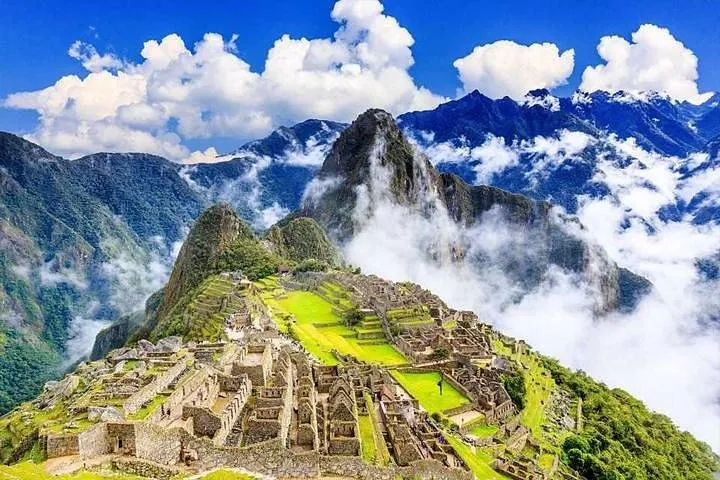
Machu Picchu Entrance Ticket
MachuPicchu.Center sells the official entrance ticket alone for the circuit you choose, with the private guide and bus only bundled in on the separate 2-day Circuit 2 commitment option. All sales are final, so double-check your date and circuit before paying.
Check Availability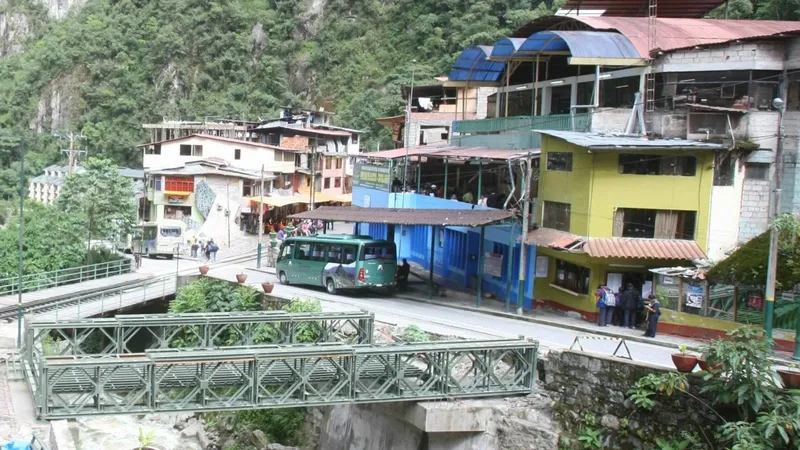 from $19.00
Aguas Calientes: Bus Transfer to Machu Picchu Citadel
Peru & U's local partner reserves your one-way or round-trip bus ticket between Aguas Calientes and the Machu Picchu citadel gate and emails it to you, skipping the ticket-booth line in town. It's non-refundable once booked, so pick your date carefully.
Check Availability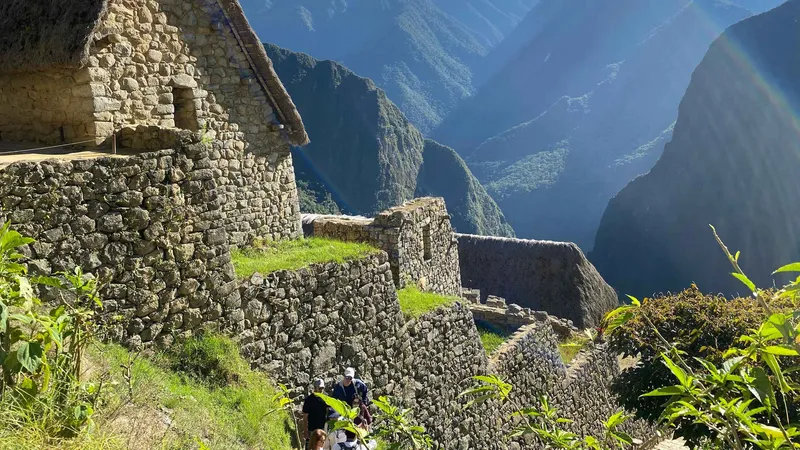 from $30.00
Machu Picchu: Group Guided Tour
This is a guide-only group tour, limited to 10 people, and it does not include the Machu Picchu entrance ticket, so book that separately before your date. Cancel up to 24 hours ahead for a full refund, and pay nothing until your spot is confirmed.
Check AvailabilityPrices, ratings and details are the platform's own. Dollar figures are the listed prices. The platform bills in your account's currency.
Is Aguas Calientes Worth Visiting: Questions
Is it better to stay in Aguas Calientes or Cusco?
For visiting Machu Picchu, Aguas Calientes is better if you want an early slot and a calm morning, because the gate sits about 390 m above town and the first buses get you there quickly. Cusco is better for your broader trip, since it has far more to see and do, but the train from Cusco takes about 4h10m each way per SERNANP, so a day trip from there costs roughly 8h20m in transit on our sum. Note that Cusco sits at about 3,399 m in the CDC high altitude band, while the town in the gorge sits at about 2,040 m below the moderate band, so most people feel the altitude in Cusco rather than in Aguas Calientes.
Is Aguas Calientes worth visiting?
As a base for Machu Picchu, usually yes, because an overnight turns a rushed late entry into an early one. As a destination in its own right, no, and it does not pretend to be. The town grew from a railway camp finished in 1931 and exists to serve the citadel. Its own attractions are the hot springs, for which no official fee is published, and the site museum, free from 12:00 to 16:00. Judge the detour by the citadel, not by the town.
How difficult is the walk down from Machu Picchu to Aguas Calientes?
The walk from the citadel area down to town is roughly 6 km and takes about 90 minutes, per Wikipedia's figure for the route, dropping the roughly 390 m between the gate elevation of 2,430 m and the town at about 2,040 m. The path descends through forest alongside the bus road's switchbacks. Conditions and the status of the foot route are not confirmed by an official source, so check locally before setting off, and remember the bus at US$19.00 on this site is the alternative if legs or weather fail.
What is Aguas Calientes actually like?
Small, steep and single-purpose. Officially named Machupicchu Pueblo, it sits on the Vilcanota River at about 2,040 m and held 4,525 people at the 2017 census. Streets run between the rail station, the bus depot and the river, and nearly every business serves Machu Picchu visitors. There is no road in, so the soundtrack is the river and the trains. It feels like a service hub because it is one, and a night there is pleasant enough if you expect exactly that.
Is one night enough in Aguas Calientes?
For almost every traveller, yes. Arrive the afternoon before, visit the hot springs or the museum's free 12:00 to 16:00 window if your timing works, sleep early, and take a 06:00 or 07:00 entry slot the next morning. Two nights only make sense if you plan a second circuit, since tickets allow one 2h30m visit each with no re-entry. For a fuller plan, see our Aguas Calientes in 2 days itinerary.
Prices, hours and terms are set by the venue or operator and confirmed at checkout.
We may earn a commission if you book through one of our links, at no extra cost to you. Full affiliate disclosure